Finance
Selling cake from your kitchen? Three ways to cover what the business exclusion leaves out
A home baker, a porch step and a broken wrist: how the business exclusion in a homeowners policy gets read, and which of three fixes actually answers it.
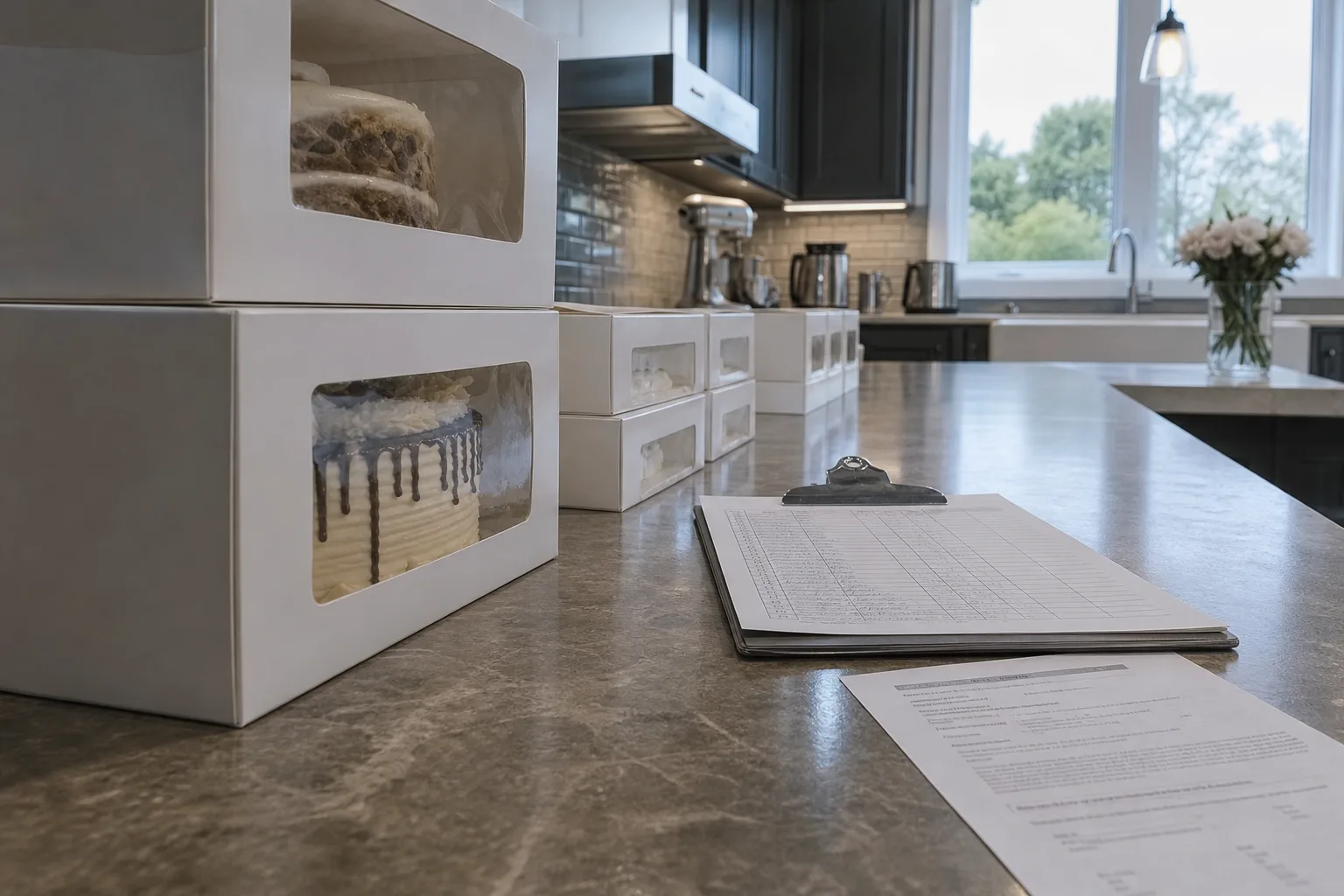
A licensed home baker in a state with a cottage food law sells about forty orders a month, all of them picked up at her front door on Friday evenings between five and seven. In November a customer catches a heel on the second porch tread, lands badly, and ends up with a wrist fracture, an urgent care bill, and six weeks of physical therapy. The homeowners liability section would ordinarily handle exactly this: a visitor, a premises defect, medical payments and defense costs. Then the adjuster asks why the visitor was there, and the answer changes which page of the policy governs.
The page is the business exclusion, and it sits in Section II, after the liability grant and before the endorsements. It removes bodily injury arising out of or in connection with a business engaged in by an insured, and the forms define business broadly: a trade, a profession, an occupation, including one carried on part-time, often with a narrow carve-out for activities producing only minimal receipts. The baker did not decide she was running a business for insurance purposes. The state agriculture department decided something adjacent when it issued her cottage food registration, and the carrier's adjuster decides the insurance question later, reading the definition against facts she has already put in writing elsewhere.
Who actually reads the exclusion, and what they read it against
The agent who sold the policy is not the decider here, and neither is the underwriter who accepted it, though both leave fingerprints. The decision happens at claim, by an adjuster holding three documents: the declarations page with its list of attached endorsement forms, the policy definitions, and whatever the household has generated that describes the activity. That third category is the one homeowners underestimate. A permit filed with the state, a sales tax account, an invoice with a logo, a sign at the end of the driveway, and a social media page listing pickup hours all speak to the same question. The way to hold the decision earlier is to put the facts in front of the carrier before a claim rather than after.
Option one: the in-home business or permitted incidental occupancies endorsement
The cheapest route is usually an endorsement bolted onto the existing homeowners policy, sold under names like in-home business or permitted incidental occupancies. It works by naming the activity, scheduling it on the declarations page, and restoring liability coverage for the listed occupancy, sometimes with a modest limit for business property on premises. The paperwork is short: a supplemental application describing the operation, square footage, foot traffic, and gross receipts, then a new declarations page showing the form number. What these endorsements include varies sharply by carrier, and products liability for food sold to the public is the line item to ask about by name, because a fall on the porch and an allergic reaction to a cake are two different exposures that not every form treats alike.
Option two: a business owners policy that stands on its own
The second route separates the two risks entirely and buys a business owners policy or a commercial general liability policy in the business's name, with the homeowners policy left to do only what it was written for. The application runs longer, asks for a class code, annual sales, and a description of operations, and the resulting policy carries premises liability plus products and completed operations, which is the part that answers a food claim. It also produces something the endorsement route generally cannot: a certificate of insurance, issued on demand, which a farmers market, a craft fair, or a corporate client can require before giving a vendor a table. That certificate, and the additional insured endorsement that often accompanies it, is frequently the thing that opens a sales channel rather than merely protecting one.
Option three: per-event coverage, and where it stops
Vendor liability sold by the day or by the show is the third option, common at markets and festivals, and it is genuinely useful for a seller whose public contact is concentrated into eight weekends a year. It is inexpensive, it issues instantly, and it names the event host as an additional insured without a phone call. What it does not do is follow the seller home, which matters a great deal in this case, because the porch step is at the house and the injury happened during pickup hours rather than at a market. For a baker whose orders move through her own front door, per-event coverage is a supplement to one of the first two routes, not a substitute for either.
The folder that makes the comparison decidable
Three things, kept together, turn this from a guess into a short conversation. First, the current declarations page with the endorsement list, because the form numbers printed there are the complete record of what has been added. Second, a one-page written description of the operation: pickup hours, visitor counts, gross receipts, where product is made and stored, whether anyone is paid to help. Third, the regulatory paperwork, since cottage food operations are licensed at the state level while the Food and Drug Administration is the federal authority responsible for food safety regulation generally, and carriers read both as evidence of what the activity is. Send the description to the agent and ask, in an email you keep, which form responds to a customer injured at pickup.
The baker in this case had the endorsement available to her for a modest annual charge and had never been asked a question that would have surfaced it. Once the activity was scheduled on the declarations page, the exclusion stopped being the operative clause and became background text. The choice was always hers to make, but only while the paperwork was still in her hands.