Education
Signed Up for CDL School? Five Checks That Decide What the Route Really Costs
A four-week Class A program that took nine weeks, and the five things a student can check beforehand to see the real clock and the real bill.
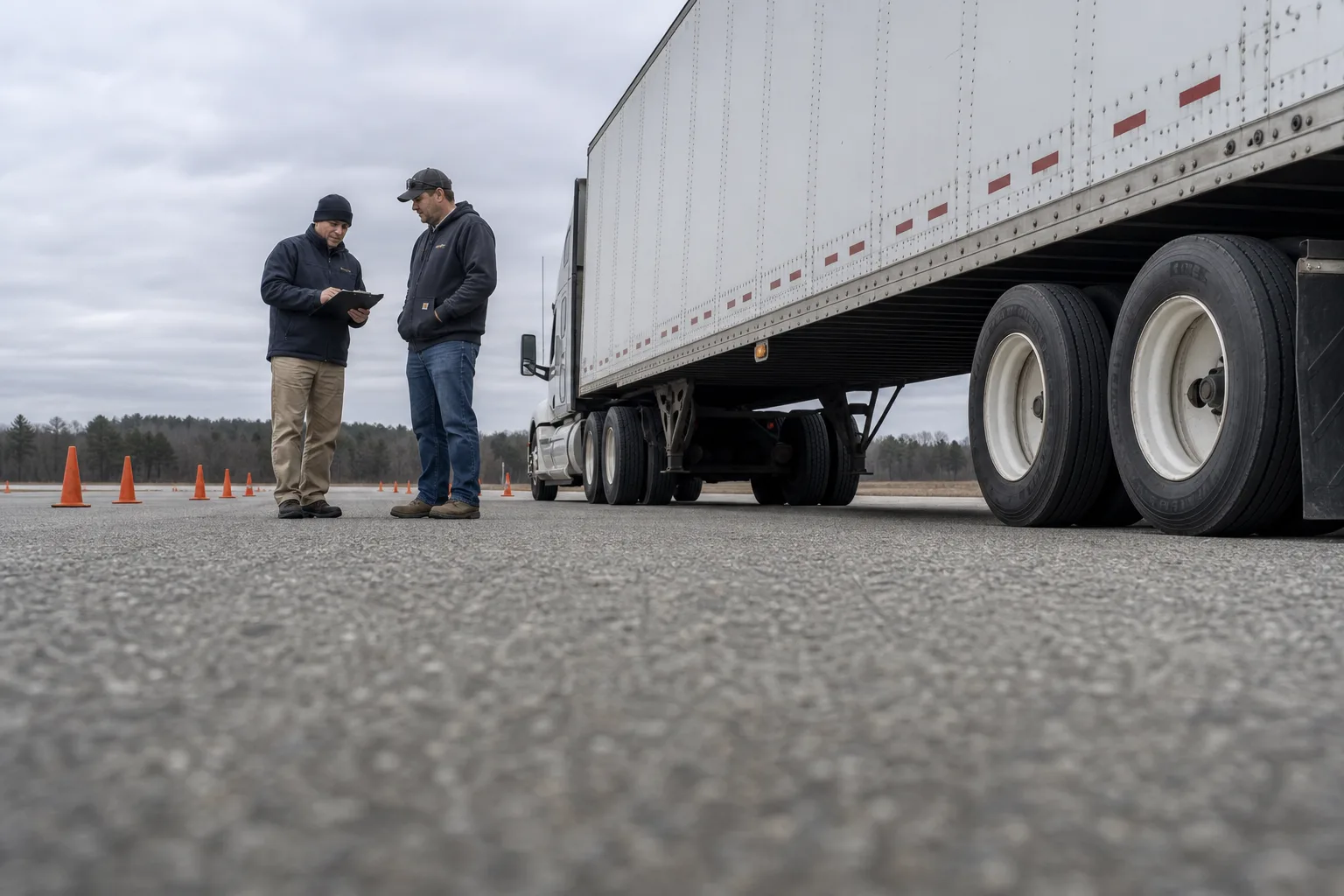
A warehouse worker in his mid-thirties enrolled in a Class A program advertised as four weeks, full time, with job placement help at the end. He finished in the ninth week. Nothing fraudulent happened, no instructor quit, and the school did not misstate its tuition. The gap between four weeks and nine was built out of ordinary things that were all disclosed somewhere: a queue for seat time in a truck, a state testing calendar, a medical card he had to get before his permit, and two unpaid weeks he had not budgeted for because he had budgeted tuition only. Working backwards, every one of those was checkable in advance.
Whether the school is listed federally, and for exactly what
Since the entry-level driver training rule took effect in 2022, a new Class A applicant cannot simply study, practice, and show up at a testing site. The training has to come from a provider listed on the federal Training Provider Registry, and the provider has to report completion before the state will let the applicant take the skills test. The Federal Motor Carrier Safety Administration oversees that registry. Listings are specific: a school can be listed for Class A theory and behind-the-wheel training and not for a hazardous materials endorsement, which is a separate curriculum. Confirm the listing covers the exact class and endorsement you intend to test for.
How the hours are actually divided, and who controls the scarce ones
The advertised length of a program describes the calendar, not the clock. Theory is the cheap part to deliver, because a classroom or an online module scales to as many students as sign up. Behind-the-wheel time does not scale, because it needs a truck, a range, and an instructor sitting next to one student. The ninth-week outcome came from that arithmetic: the student finished theory on schedule and then waited for range slots shared with two cohorts ahead of his. Ask how many trucks are in service, how many students per truck per day, and whether public road hours are scheduled or assigned as they open.
The costs that sit outside the tuition line
Tuition is the number schools compete on, so it is the number that gets quoted, and the items around it tend to be mentioned later and separately. A commercial learner's permit carries a state fee. The DOT physical and medical examiner's certificate is a separate appointment with a separate charge. Endorsement knowledge tests are each priced on their own, the skills test has its own fee, and a retest on any portion is charged again. Lodging matters if the nearest listed provider is a drive away. Add the weeks of reduced or missing income, which in this case were the largest single item on the list.
What a carrier-paid program is actually lending you
Company-sponsored training is usually described as free or close to it, and the structure underneath is a contract rather than a gift. The carrier pays the school, you agree to drive for that carrier for a stated term, and the balance is forgiven across that term in increments. Leave early, or get released early, and the unforgiven remainder becomes a debt, sometimes deducted from final pay, sometimes sent out for collection. Read the term length, the forgiveness schedule, the definition of a qualifying separation, and the interest rate if the balance converts. Those four provisions decide whether the offer is cheaper than paying tuition yourself.
Who schedules your skills test, and how far out the calendar runs
Completing training and taking the test are two different events on two different calendars, and the second one is rarely controlled by the school. Depending on the state, the skills test is administered by the licensing agency or by a third-party examiner the school may or may not have in house. A school with its own examiner can often test a student within days of completion. A school that sends students to a state site may be working against a backlog measured in weeks. That was the final stretch of the nine. Ask for the current wait, in days, and ask what a retest does to it.
The student did get his license, and the carrier that hired him did not care that the route took nine weeks instead of four. What the delay cost him was five weeks of income he had not planned to lose, which is the part the five checks above would have put on the table before he enrolled. The route itself was sound. The budget was built on the advertised calendar rather than the real one, and the real one was available to anyone who asked for it in those specific terms.