Housing
Pressure Washing a 1950s House? The Two Rules That Decide Who Holds the Wand
Exterior cleaning looks unregulated until runoff and pre-1978 paint enter the picture, and the rules change at the county line.
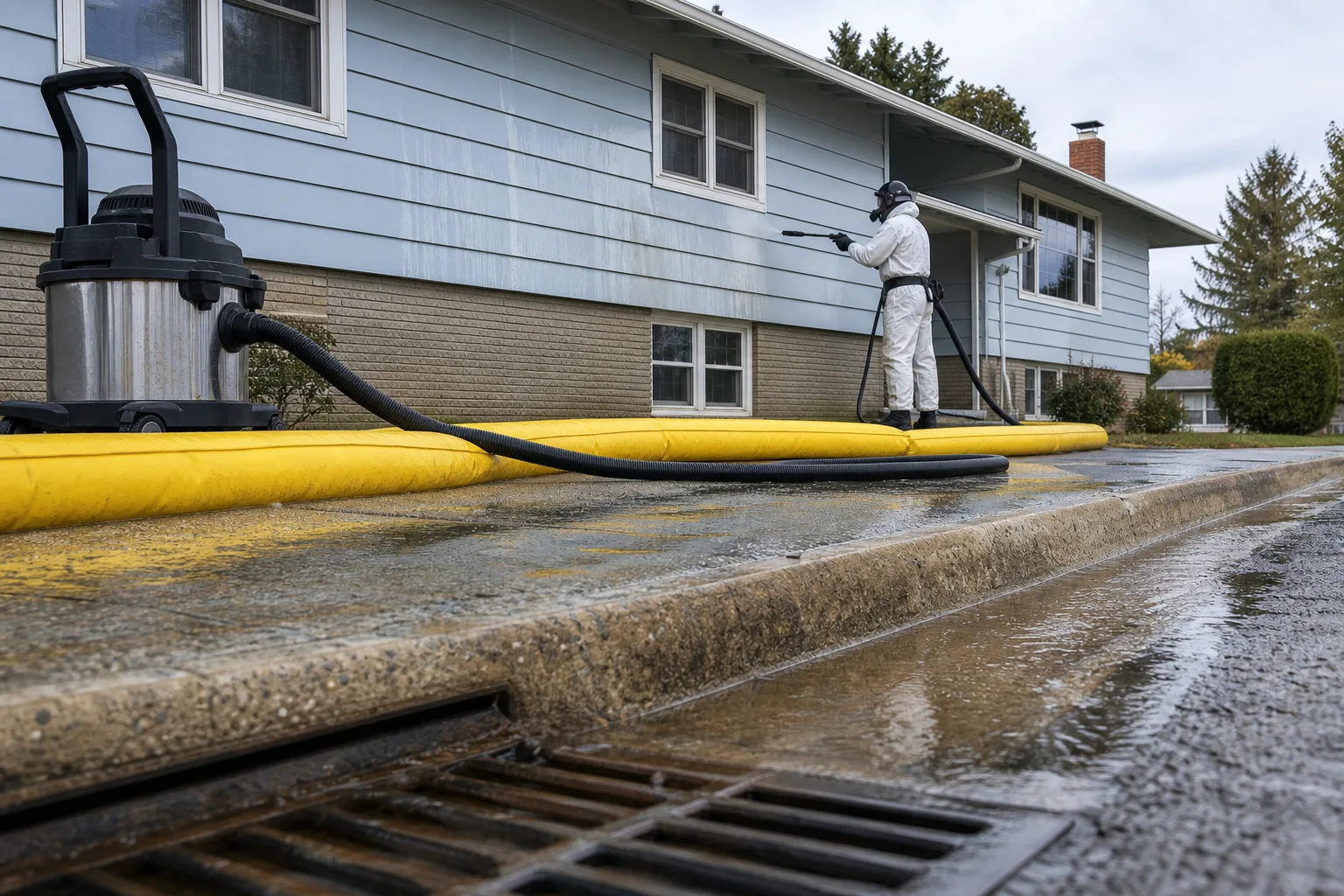
A homeowner in a 1954 split-level asks three companies to quote washing the siding, the walkway and the north face of the garage, where a green film has settled. Two arrive with a hose, a gas machine and a bucket of sodium hypochlorite mix, and both plan to let the water run down the driveway to the curb. The third asks what year the house was built, asks whether the storm drain at the corner is marked, and quotes noticeably higher. That gap is not a difference in labor. It is a difference in which rules the crew has decided apply to them.
Where the water goes is a local question with a federal spine
Wash water carrying detergent, paint chips and biological growth is a discharge, and the Environmental Protection Agency oversees the stormwater permitting framework that municipalities operate under. What that means on a driveway depends entirely on your city. Some jurisdictions require that exterior wash water be contained, vacuumed and routed to the sanitary sewer or hauled off, and they enforce that against the contractor, the property owner, or both. Others have an ordinance that is only ever cited after a neighbor complains. A few have nothing on the books at all beyond a general prohibition on dumping into a storm drain.
The practical consequence is that a company working across a metro area may be operating under three different sets of obligations in one week. Crews that invest in reclamation equipment, berms, vacuums and a disposal arrangement carry that cost in every quote, including the jobs where nobody would check. Crews that do not are cheaper for a reason that has nothing to do with the finish on your siding. Ask directly what happens to the water, and ask which municipality's rule the answer is based on. A firm that works legally in the strictest town nearby will answer without hesitating.
A pre-1978 house turns cleaning into regulated work
The second rule is older than most homeowners realize and catches more work than they expect. Housing built before 1978 may contain lead-based paint, and the EPA administers the renovation, repair and painting requirements that apply when work disturbs that paint. Aggressive exterior surface preparation, including high-pressure washing that removes paint, falls inside that category rather than outside it. Firms performing covered work on pre-1978 homes are expected to be certified, to have a certified renovator on the job, to contain the work area, and to give the owner the required lead pamphlet before starting.
This is where the map matters again. Several states have been authorized to run their own lead programs in place of the federal one, and their certification requirements, fees and enforcement intensity differ from each other and from the federal baseline. A contractor certified in one state is not automatically certified across a state line. For a homeowner, the check is short: ask for the firm certification number, ask which state or federal program issued it, and ask whether the plan for your siding involves removing paint or only removing growth. Those are two different jobs with two different rulebooks.
Who paid for the advice you are acting on
Almost every recommendation a homeowner receives about exterior cleaning is produced by someone who profits from the answer. The free inspection that finds mildew is performed by the company that sells mildew removal. The roof cleaning warning arrives from a roofer. Trade associations that publish standards for duct cleaning, chimney sweeping and soft washing are funded by member dues, which does not make their technical guidance wrong, but does mean the guidance exists to distinguish paying members from everyone else. Certification logos on a truck are, at minimum, evidence that the firm bought something and sat for something.
The advice with no seller behind it tends to sit in unglamorous places: the municipal stormwater page, the state lead program page, the state contractor licensing board's lookup tool. None of them are trying to sell you a service, and all of them will tell you what is actually required in your specific address rather than what is generally recommended. Reading those three pages before the estimates arrive changes the conversation, because you stop asking whether the price is fair and start asking what the price includes.
Licensing thresholds move at the state and city line
Pure cleaning is unlicensed in much of the country, which is why the field is easy to enter and why price ranges are wide. The line gets crossed quickly. Sealing a deck, repairing a soffit found rotten during the wash, or replacing a gutter section can push the work into licensed contracting, and states set that threshold differently, some by trade, some by the dollar value of the job, some by both. Cities layer their own business licenses and permit requirements on top. Insurance is the other half: general liability plus workers' compensation, verified through a certificate sent by the insurer rather than a photocopy from the contractor.
The homeowner in the split-level took the higher quote after two questions. The crew recovered the wash water, treated the north wall with a low-pressure application instead of stripping it, and documented that no paint was removed, which kept the job outside the lead rule rather than in violation of it. The file with the certificate of insurance and the disposal note now sits with the closing documents, where the next buyer's inspector will find it.