Family
Ordered the Marker in March, Set in August. Where Those Five Months Went
A family's grave marker was promised by Memorial Day and installed in August. Working backward through the bill shows which costs were fixed, which were optional, and who controlled the calendar.
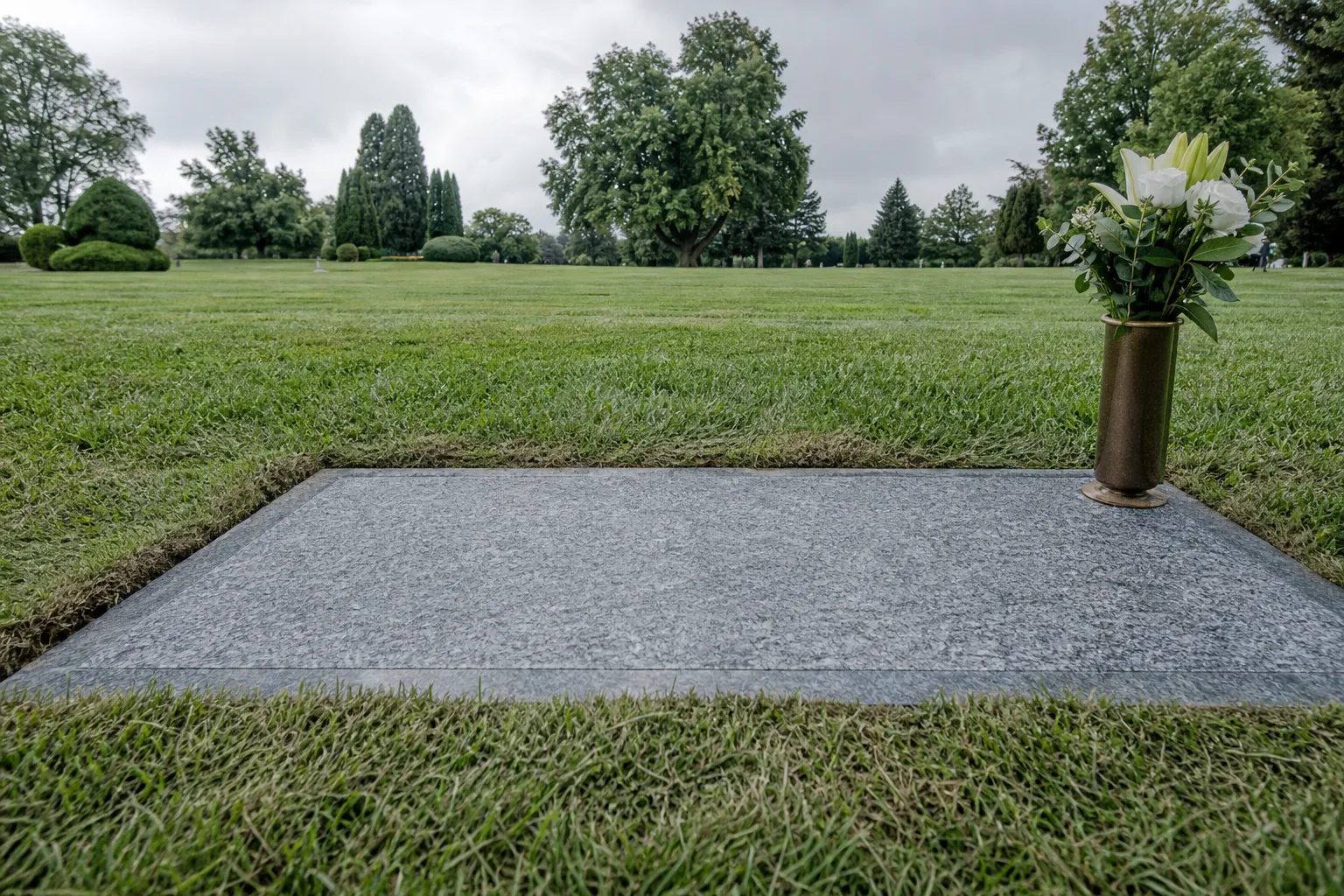
A family in a lawn-park section of a municipal cemetery ordered a granite marker for their mother in the second week of March, paid a deposit of roughly half, and understood from the conversation that the stone would be in place for Memorial Day. It was set on a Tuesday in early August. Nobody lied to them, no deadline was missed in the contractual sense, and the final bill came within forty dollars of the estimate. The delay sat entirely in a part of the transaction they had never been told existed, because the person who sold them the marker did not control it.
The quote looked like one bill and was actually three businesses
The sheet they signed listed a stone, lettering, a base, a foundation, and a setting fee, stacked in a single column with one total at the bottom. Only the first three belonged to the monument dealer. The foundation was poured by the cemetery's own grounds crew, billed at the cemetery's published rate per cubic foot and remitted by the dealer as a pass-through. The setting fee covered the dealer's truck, hoist, and two-man crew on the day, but the day itself was assigned by the cemetery superintendent, not by the dealer, and not by the family who had paid for it.
That structure is ordinary and it is not hidden, but it rarely gets explained unless someone asks who performs each line. The Federal Trade Commission is responsible for the federal rule governing how funeral providers disclose their prices, and that rule reaches funeral homes squarely. Cemeteries and monument dealers sit at the edge of it or outside it depending on the arrangement, which is why a marker quote can be perfectly honest, perfectly itemized, and still silent on who actually performs the work and when. The remedy is a question, not a complaint: for each line, who does it, and who schedules it.
Reading the five months backward
The March order went to a sandblast shop that had the granite color in stock, which was the fast part. The layout proof came back to the family in the first week of April, and they held it for eleven days, because a cousin wanted the middle initial added and the family wanted to agree before answering. That was reasonable and it cost them a production slot. The carved stone shipped in early May to the dealer's yard, where it sat, finished and paid for, waiting on a foundation that did not yet exist, in a section where the frost had been out of the ground for weeks.
Foundations in that cemetery are poured in batches, because mobilizing a crew, a mixer, and a backhoe for a single four-by-one footing is not how any grounds department works. The superintendent's practice was to accumulate orders until there were enough to justify a day, then pour, then let the concrete cure for a set period before any weight went on it. The family's order arrived two days after the spring batch closed. The next pour was in July. Everything after that moved quickly: cure, schedule, set, inspect, and the marker was level and sodded within three weeks of the concrete going in.
None of that is unusual, and the dealers who sell headstones in a given county generally know each cemetery's pour calendar well enough to tell you, in March, whether you are chasing the spring batch or waiting on the summer one. The information exists. It travels by phone call between a dealer's office and a superintendent's office, and it reaches the family only if the family asks the question in a form that requires a date rather than a reassurance.
Which lines were fixed and which were choices
Working down the same sheet, the fixed items were set by the cemetery's rules rather than by taste. The section required a flush marker of a stated maximum size, on a poured foundation of a stated minimum depth, which meant the foundation charge was not negotiable and not avoidable. The setting fee was likewise structural, since the cemetery does not permit families or unapproved crews to place stone on its ground. Those three lines, marker within spec, foundation, and professional setting, accounted for the large majority of the total and would have appeared on any quote from any dealer serving that cemetery.
The optional lines were real money and genuinely elective: a polished top surface instead of a steeled finish, a scroll border, a laser-etched image of a farmhouse, a bronze vase with a threaded sleeve, and pre-paid lettering for the surviving spouse's name with the birth date cut now and the death date left open. The family kept the vase and the etching and declined the border. The pre-cut name is the line worth understanding, because the alternative is a second trip years later, with a crew, a minimum charge, and on-site lettering that never quite matches the shop work.
The order that keeps the calendar from surprising you
The sequence that would have put this marker in place by late May starts at the cemetery office rather than the showroom. Ask for the section's written regulations and the current fee schedule, both of which almost every cemetery keeps on paper, and read them for three numbers: permitted marker dimensions, foundation charge and how it is computed, and any marker permit or installation fee the cemetery itself collects. Then ask the superintendent one scheduling question: when does the next foundation pour close, and what is the cutoff date for an order to be included. Write the answer down with the name of the person who gave it.
Carry those answers into the dealer conversation and the quote stops being opaque. Agree the proof deadline out loud, since the eleven days this family spent on a middle initial were the only part of the delay within their control, and set a date by which the family will return the approved drawing. Confirm in writing which lines are pass-through to the cemetery, what the deposit buys, and what the balance is due against: delivery to the yard, or the stone standing level on its foundation. That last distinction decides who is holding the risk during a wait.
The family got a marker they are happy with, at the price they were quoted, and the only thing that went wrong was a summer spent not knowing why. Five months was never the dealer's number or the cemetery's number. It was the gap between an order and a pour schedule, and that gap is published, knowable, and answerable by a single phone call made before anyone signs.