Housing
Moved to a New State? The Maintenance Items That Stop Applying and the Ones That Start
A household that carried a Midwestern maintenance calendar to the coast learned which tasks were habit, which were local rule, and who was being paid to tell them the difference.
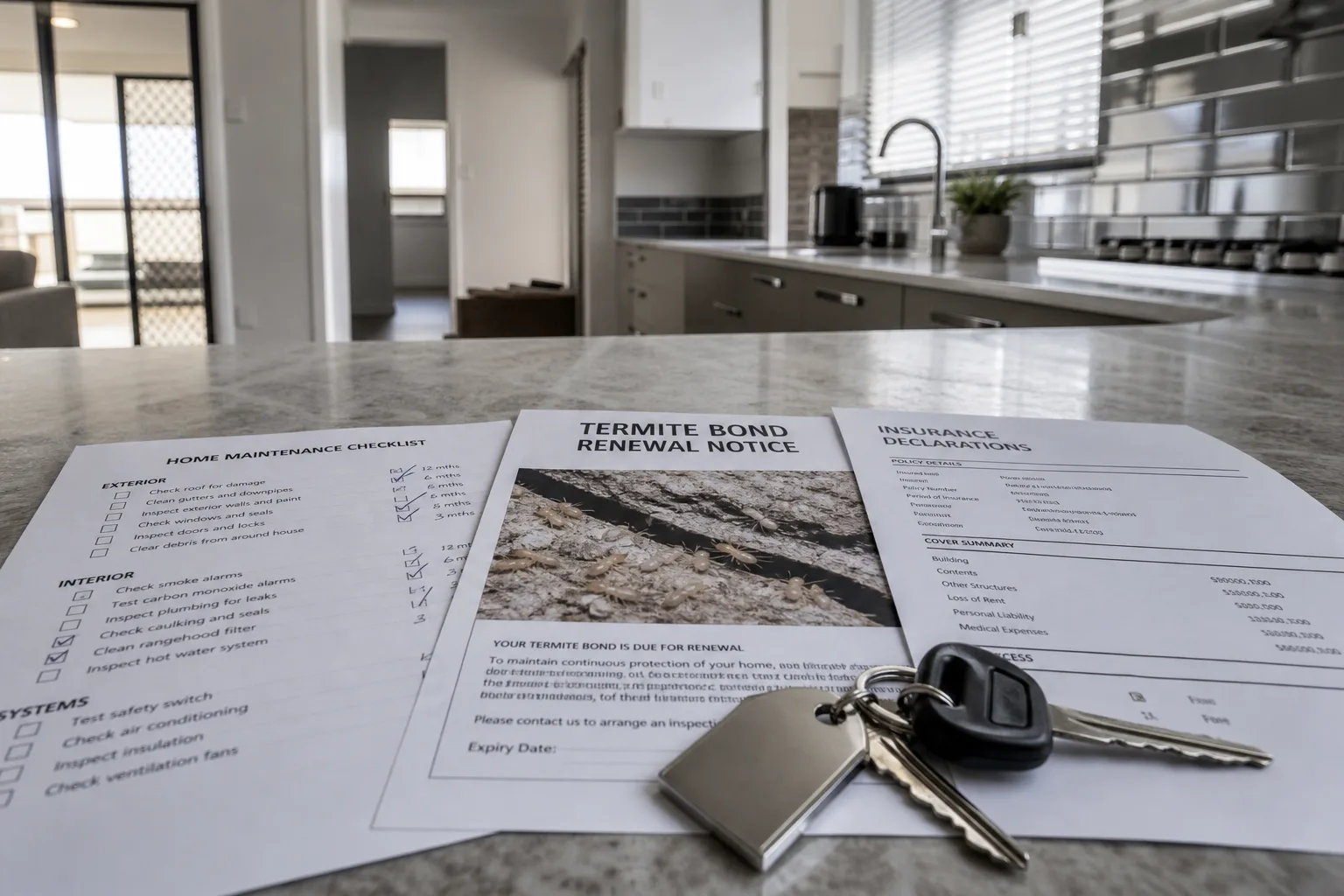
A household that moved from outside Dayton to the Charleston suburbs carried its maintenance calendar across in a spreadsheet, unchanged: furnace serviced in September, gutters cleared twice, hoses drained before Thanksgiving, water heater flushed in spring. Two years in, the spreadsheet was almost entirely wrong. The furnace ran a handful of nights a year and the air conditioner ran nine months. Nothing froze. What did happen was a termite bond that lapsed because nobody renewed it, a crawlspace vapor barrier that nobody had ever been told existed, and a first insurance renewal that asked questions the old policy never had.
The interesting part is not that the list was wrong. It is where the list came from, and who was paid by whom to write it.
Almost every maintenance schedule is published by someone selling one of the tasks
The Dayton calendar had been assembled, item by item, from sources with a commercial position. The furnace items came from the heating contractor's service agreement, billed as a recurring monthly debit, which is a good deal for a furnace and an odd fit for a heat pump that never rests. The gutter items came from a gutter company's seasonal mailer. The water heater flush came from a manufacturer's manual whose real purpose was to define the conditions under which a warranty claim gets denied. None of that advice was dishonest. All of it was shaped by what the author had to sell, and a schedule built from vendor literature will always be heavier on the tasks vendors perform than on the ones a homeowner can do with a flashlight in twenty minutes.
The test worth applying to any item on a list is simple. Ask what happens if it is skipped for two years, and ask who would know. If the answer is that a warranty voids, an inspection fails, or a claim gets reduced, the item is real and someone specific will check it. If the answer is that a salesperson will send another postcard, the item may still be worth doing, but it is not what holds the schedule together.
The county, the utility and the insurer write more of the calendar than the manual does
Maintenance intervals feel like national common sense and are mostly local. Septic systems are the clearest case: the Environmental Protection Agency oversees decentralized wastewater programs nationally, and the actual pumping and inspection intervals are set county by county, with some jurisdictions requiring an inspection at the point of sale and others operating an operating permit that expires on a schedule and must be renewed with a licensed pumper's paperwork. Backflow preventers on irrigation lines are tested annually in many water districts and never mentioned in others. Defensible space clearance around a house in the wildland-urban interface in California is a rule with an inspection behind it, not a suggestion. Sidewalk snow clearance in northern cities runs on an ordinance measured in hours after the storm ends.
The coastal version of the Dayton list looked different for the same reason. A termite bond in the Southeast is a renewable contract with an annual inspection attached, and it is frequently the document a buyer's lender or attorney asks for at closing, which makes the renewal date a financial deadline rather than a chore. Crawlspace humidity, gutter capacity sized for a summer downpour, and the condition of window and door flashing all moved up. Frozen hose bibs disappeared entirely.
What separates a schedule that holds from a list that lapses
A barely adequate schedule is a list of tasks with frequencies next to them. It fails in the second year, quietly, because nothing is attached to it. A good one does three things instead. It anchors each item to an event that already happens without effort: the insurance renewal, the property tax bill, the last leaf drop, the switch to standard time, the first utility bill over a certain amount. It records evidence, meaning a dated invoice, a photograph, or a line in a notes file, because the parties who eventually care (an adjuster, a warranty administrator, a buyer's inspector) do not accept recollection. And it is pruned, so that the twelve items that genuinely apply are visible instead of buried in forty that were copied from a generic checklist.
Pruning is the step people skip, and it is the one that decides whether the rest survives. A schedule with forty items on it is abandoned in March. A schedule with a dozen, each tied to a real consequence and a real date, gets done.
How to rebuild the list after a move
Start with the paperwork that already names deadlines: the homeowners policy and any endorsements, the closing file, the manufacturer warranties on anything under ten years old, and any bond or service contract that transferred with the house. Then call the county health department and the water utility and ask directly what is required at the address, because those two offices give straight answers and are not selling anything. Whatever is left after that is discretionary, and discretionary work should be scheduled by consequence, not by season.
The Charleston household ended up with eleven items, three of which carry outside deadlines and eight of which are anchored to bills that arrive anyway. It has held for three years, which the forty-line version never did.