Legal Affairs
Hit by a Tractor-Trailer? The Nine Days Before the First Meeting Decide What It Is Worth
A household that spent nine days taking free advice from people paid by someone else, and what finally made the first paid legal hour productive.
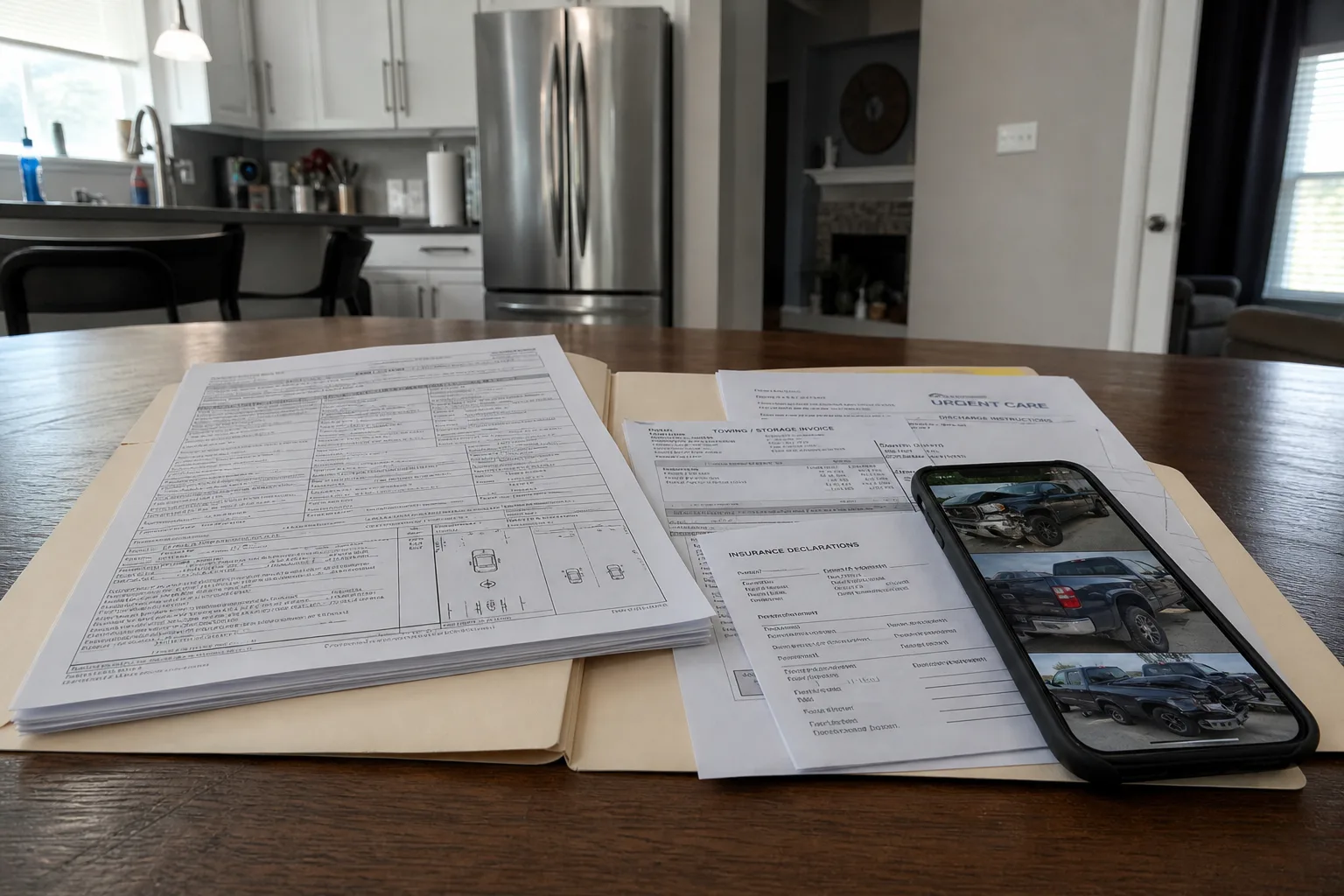
The collision happened on a Tuesday afternoon at the bottom of an interstate on-ramp, when a loaded tractor-trailer failed to slow for stopped traffic and pushed a family's pickup into the vehicle ahead of it. The driver, a woman in her forties, walked away with a fractured wrist and a concussion that was not diagnosed for six days. Her husband, in the passenger seat, had bruising from the shoulder belt and nothing else. The pickup was towed to a storage yard twenty-six miles from their house. Over the next nine days, before they spoke to a lawyer, five different people told them what to do next.
Five conversations, and the question of who was paying for each one
The tow operator advised them not to rush the vehicle out of storage, because the insurance would cover it. He bills by the day. The carrier's adjuster, calling on Wednesday morning, said the company accepted responsibility and suggested they keep medical treatment simple so the file could be closed quickly; he is paid by the trucking company's insurer, whose interest is a small, early, final number. A body shop estimator recommended repair over a total loss, which is the outcome that keeps his bay full. None of these people lied. Each gave advice that was accurate as far as it went and shaped by who signs their checks.
The fourth conversation was the urgent care billing clerk, who told the wife her health insurance would not pay because an auto claim existed, and the fifth was a neighbor whose cousin had been through something similar in a different state under different rules. The household treated all five as neutral because all five were free. That is the pattern worth naming. In the first week after a serious truck collision, almost everyone who calls you unprompted is paid by an organization with a stake in how your claim ends, and the only advisor you have to pay is the only one with no other employer.
The evidence that belonged to someone else, and the window on it
A commercial tractor records more about itself than a passenger car does. The engine control module holds speed and braking data, the carrier keeps driver logs and dispatch records, and many fleets run forward-facing cameras that overwrite on a cycle measured in days or weeks. The Federal Motor Carrier Safety Administration oversees interstate carriers and the records they are required to keep, which means those records exist in a known form and can be asked for precisely. But they sit on the carrier's servers, under the carrier's retention schedule, and nobody at the company has a duty to freeze them until someone sends a letter saying so.
That letter was the first concrete thing the family's lawyer did, and it was drafted the afternoon of the first meeting. When they called a truck accident attorney on day nine, the first question was not about injuries but about whether anyone had put the carrier on notice to preserve data. Nobody had. The pickup, still sitting in the tow yard accruing storage, turned out to be the one piece of physical evidence the household controlled outright, and the instruction was to leave it there and stop negotiating with the yard until photographs and a download had been arranged.
What the paid hour was actually spent on
The meeting lasted a little over an hour and covered four things. First, the preservation letter and who it goes to, which includes the carrier, the insurer, and sometimes a separate leasing company that owns the trailer. Second, the medical sequence: a concussion that goes undocumented for six days is harder to connect to the crash than one noted in the emergency department, so the gap had to be closed with a referral and a clear record of symptoms. Third, health insurance and the lien that would follow. Fourth, the wage question, which required her employer's payroll records rather than her own estimate of hours missed.
What made the hour productive was a folder assembled the night before. The crash report number, the responding agency, photographs taken at the scene on both phones, the tow yard's invoice, discharge paperwork from urgent care, the health insurance card, the declarations page of their own auto policy including underinsured motorist coverage, and a single page listing every person who had called them and what each had said. That last page saved the most time. It told the lawyer, in two minutes, exactly what the adjuster had already committed to on a recorded line.
Reading the fee agreement as a budget
Contingency fees are described as costing nothing up front, which is true and incomplete. The percentage is one number; case costs are a second, and in trucking cases those costs run higher than in ordinary car collisions because accident reconstruction, data downloads, and expert review are routine rather than exceptional. The question that matters is whether costs come off the top before the fee is calculated or after, because the two methods produce different amounts in the client's hand on identical settlements. The household asked, got a written answer, and asked a further question: who advances the costs, and what happens to them if the case is lost.
They also asked whether the fee percentage changes if the case is filed, which it commonly does, and who in the office would actually handle the file day to day. Those are not adversarial questions. They are the same questions you would ask a contractor about allowances and change orders, and a firm that answers them plainly in the first meeting is telling you how it will communicate for the next two years.
Nine days of free advice cost this family nothing in fees and a meaningful amount in evidence that nearly aged out. One paid hour, with a folder on the table, produced a preservation letter, a medical referral, and a clear line between the advisors who worked for them and the ones who did not.