Housing
A Faded Ceiling Stain and a Rebuilt Bathroom Floor. Five Checks Before You Defer a Small Repair
A shrinking bead of caulk cost one household a bathroom floor rebuilt to the joists. Five checks that separate the small jobs you can safely postpone from the ones you cannot.
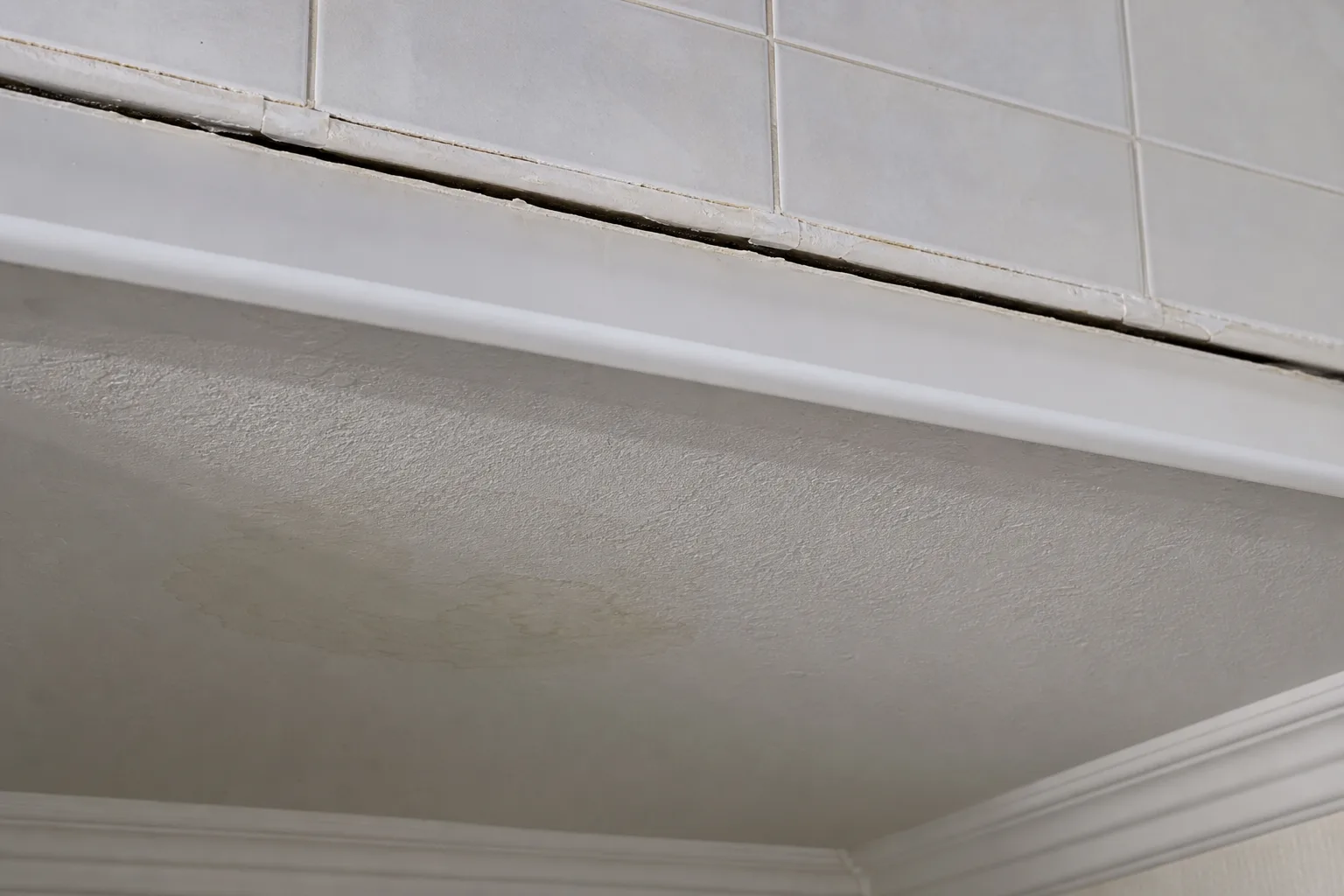
The stain showed up on the family room ceiling in March, a soft brown ring about the size of a saucer, directly under the upstairs tub. By the time anyone thought to look again in May it had faded to almost nothing, which the household read as proof the problem had resolved itself. It had not. Two winters later a flooring installer pulled up vinyl in that bathroom and found the subfloor around the tub apron soft enough to press a thumb into, with the joist below it darkened along four feet of its length. The original fault was a bead of caulk at the tub-to-tile junction that had shrunk and pulled away from the tile on one side.
What makes that case worth staying with is not the rot. It is the fading stain, which was the only signal the house sent and which read, to a reasonable person, as good news. Water had stopped reaching the drywall because it had found a shorter route into the framing cavity, where nothing was ever going to tell anyone about it. The household did not ignore a warning. It received one, interpreted it with ordinary common sense, and got the wrong answer. Building the judgment to avoid that is a different skill from being conscientious, and these five checks are what it consists of.
Check whether the water has somewhere to dry, or only somewhere to go
A leak that wets a surface you can see and touch is on a clock you control, because the surface dries between events and the damage stays visible. A leak that wets framing inside a closed cavity has no such clock. Insulation holds it, sheathing holds it, and the drying rate falls below the wetting rate, at which point the material is wet continuously rather than repeatedly. That is the line where a maintenance item becomes a structural one. The Environmental Protection Agency is the federal body responsible for guidance on indoor moisture and mold, and the distinction it draws between wet and continuously wet is the one that matters here. Ask of any small leak whether the water can get out the way it came in.
Check who gets paid when you say yes, and who gets paid when you say no
The household in this case had a free moisture inspection offered by a restoration company that runs radio ads, and declined it on the reasonable grounds that a free inspection from a firm selling remediation is not a neutral opinion. That instinct was sound and the conclusion drawn from it was not. The right response to a conflicted opinion is a second opinion, not no opinion. A home inspector charging a flat fee has no stake in what the moisture meter says. A plumber billing hourly for diagnosis has a mild interest in finding work and a strong interest in not being called back. A warranty administrator is paid to find the exclusion. Learn the incentive attached to each voice, then weight the advice accordingly rather than discarding it.
Check the growth curve, not the current size
Most upkeep is linear. A dirty furnace filter costs a bit more in electricity every month it stays in, and the meter runs at roughly the same rate in month nine as in month two, which means deferring it is a straightforward trade you can price. Rot is not linear. Wet wood loses strength, loses strength faster as it gets wetter, and draws more water as its structure opens up, so each season costs more than the one before it. Corrosion at a supply fitting behaves the same way. Before deferring anything, decide which curve it sits on, because a linear problem can wait for a convenient month and a compounding one is buying you nothing by waiting.
Check what the cheap part is attached to
The caulk was worth a few dollars and twenty minutes on a Saturday. What made its failure expensive was the sequence of things it sat on top of: tile, backer board, subfloor, joist, and the ceiling and lighting of the room below. The repair bill is almost never set by the failed component. It is set by the most expensive item in the path the failure travels, plus the cost of taking apart everything above that item to reach it. Run that path out loud before you postpone a job. A worn washer under a sink with a stone countertop and a finished basement below it is a different decision from the same washer in a utility room with a floor drain.
Check whose deadline is actually running
Households tend to assume the schedule is theirs. Often it belongs to someone else, and the terms are already written. A homeowners policy will pay for sudden and accidental discharge and will decline damage attributed to long-term seepage, so the deferral converts a covered loss into an uncovered one at a date the adjuster gets to determine after the fact. Manufacturer warranties on water heaters and roofing carry maintenance conditions that go unread until a claim. Seasonal work has its own hard edges, since exterior sealant will not cure below a certain temperature and the window closes in November. Find the earliest externally imposed deadline attached to the item, and treat that, not your own convenience, as the date.
The household that rebuilt the bathroom floor now photographs the underside of every plumbing fixture twice a year and files the images by date, which took an afternoon to set up and turns a vague impression into a comparison. That habit is worth more than any single one of these checks, because it supplies the evidence the checks run on. Judgment here is mostly a matter of asking what the thing is attached to, what it is wetting, and who profits from your answer.