Legal Affairs
Charged With a DUI and Handed a Flat Fee? What That Number Does and Does Not Cover
A DUI flat fee usually buys one phase of a case, not the whole thing. Here is how to read the quote, the costs column, and the trust account rules before you sign.
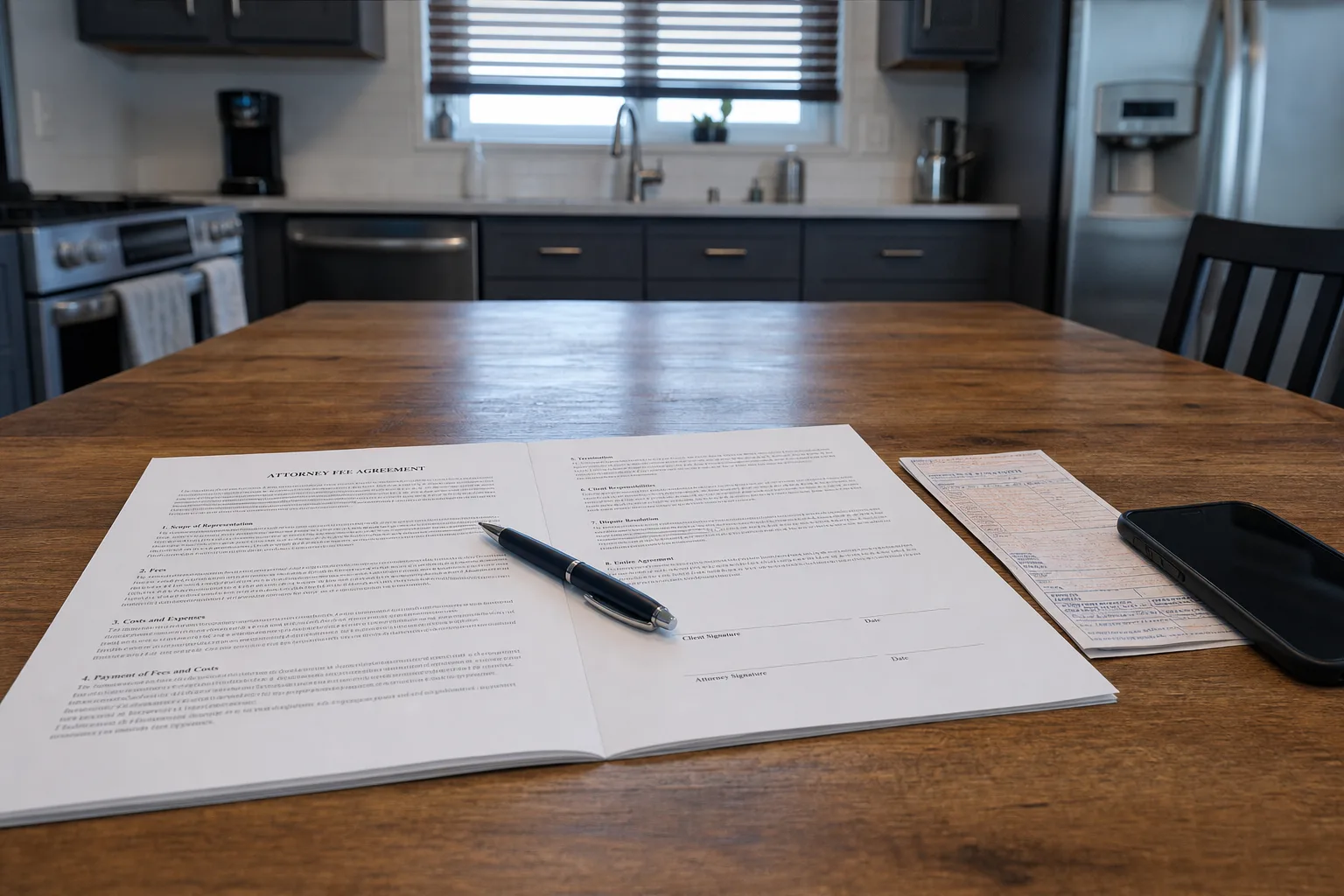
The man had the fee agreement in his hand for eleven minutes before he signed it, which was about ten minutes longer than most people take, and he still missed the sentence that mattered. It was on page two, in the same type as everything else, and it said the fee covered representation through resolution by plea or dismissal. He read that as the case being handled. What it meant was that if the case went to trial, a second fee, quoted separately and not yet quoted at all, would attach. Four months later it went to trial.
Nothing about that agreement was improper. It was phased, which most criminal defense fee agreements are, and the phases were written down. The failure was in reading a scope description as a promise of outcome.
A flat fee is priced against a stage, not against a charge
Defense work in a first-offense impaired driving case splits into recognizable blocks: arraignment and early appearances, discovery review and motions, an administrative license hearing on its own track and its own deadline, then either negotiated resolution or trial. A quoted flat fee almost always attaches to the first three and stops before the fourth. Trial is priced separately because trial consumes days rather than hours, and no one can forecast at intake whether a case will get there. When you ask what a number covers, the useful question is which of those blocks it ends at, and what the next block costs if you reach it.
Fees and costs sit in separate columns and only one of them is the quote
Fees pay for the attorney's time and judgment. Costs are everything the office pays out on your behalf: filing fees, certified records from the arresting agency, transcripts of a hearing, an interpreter, mileage for an out-of-county appearance, and, in the cases where it matters most, an independent expert. Breath testing instruments are evaluated against federal standards maintained by the National Highway Traffic Safety Administration, and a defense that turns on instrument maintenance, calibration intervals, or operator certification usually needs someone qualified to testify about those records. That expert bills you, through the firm, at the expert's rate. A quote that is silent on costs is not a quote for the whole bill.
Where your money sits before it is earned
Every state supreme court, through the rules of professional conduct its bar administers, governs how advance payments are held. The default is that unearned money belongs to you and sits in a client trust account, separate from the firm's operating funds, and moves across only as work is performed. Some jurisdictions permit a flat fee to be treated as earned on receipt if the agreement says so in plain language and tells you that you may still be entitled to a refund of any unearned portion if the representation ends early. That disclosure is the protection. If the agreement is silent about refunds, ask for it in writing before you pay, because a conversation about it after a case ends is a worse conversation.
What the retainer buys in an ordinary week
Most weeks it buys nothing visible. A status conference gets continued because the prosecutor has not finished producing video. Someone in the office requests the maintenance logs for the instrument, again. A paralegal calendars the license hearing deadline, which in many states runs from the date of arrest and is measured in days, not months, and is the single item most likely to be lost while everyone is focused on the criminal court date. Then one week in six, something real happens: a suppression motion is argued, an offer arrives, a decision has to be made quickly. You are paying for availability across the quiet weeks so that the loud week is handled by someone already holding the file.
That rhythm is why hourly billing is rare here and why the flat fee exists. It also explains what to test in a first meeting. Ask a drunk driving lawyer how many court appearances the quoted fee assumes, who appears if the lead attorney is in trial elsewhere, whether the license hearing is inside or outside the number, and what triggers the trial fee. A clear answer to all four, written into the agreement, is the sign of an office that has had this conversation before and would rather have it now.
How to read the quote before you sign it
Put the agreement next to a blank page and write down four figures: the fee for the phase you are in, the fee for trial, an honest estimate of costs, and what happens to money already paid if you change counsel in month three. If the document answers all four, you are not guessing. If it answers two, ask for the other two by email, and keep the reply, because an email that states scope is part of the agreement in practice and often in law.
The man who signed in eleven minutes would have caught it in fifteen. Not because the clause was hidden, but because he was reading for reassurance rather than for scope, and those are different jobs done with the same pair of eyes.