Finance
Buying a Ring Worth More Than It Looks? Start by Asking Who Pays the Appraiser
The appraisal handed over at the register is a document with an author, and that author is usually paid by the seller. Here is how that arrangement formed and what to ask instead.
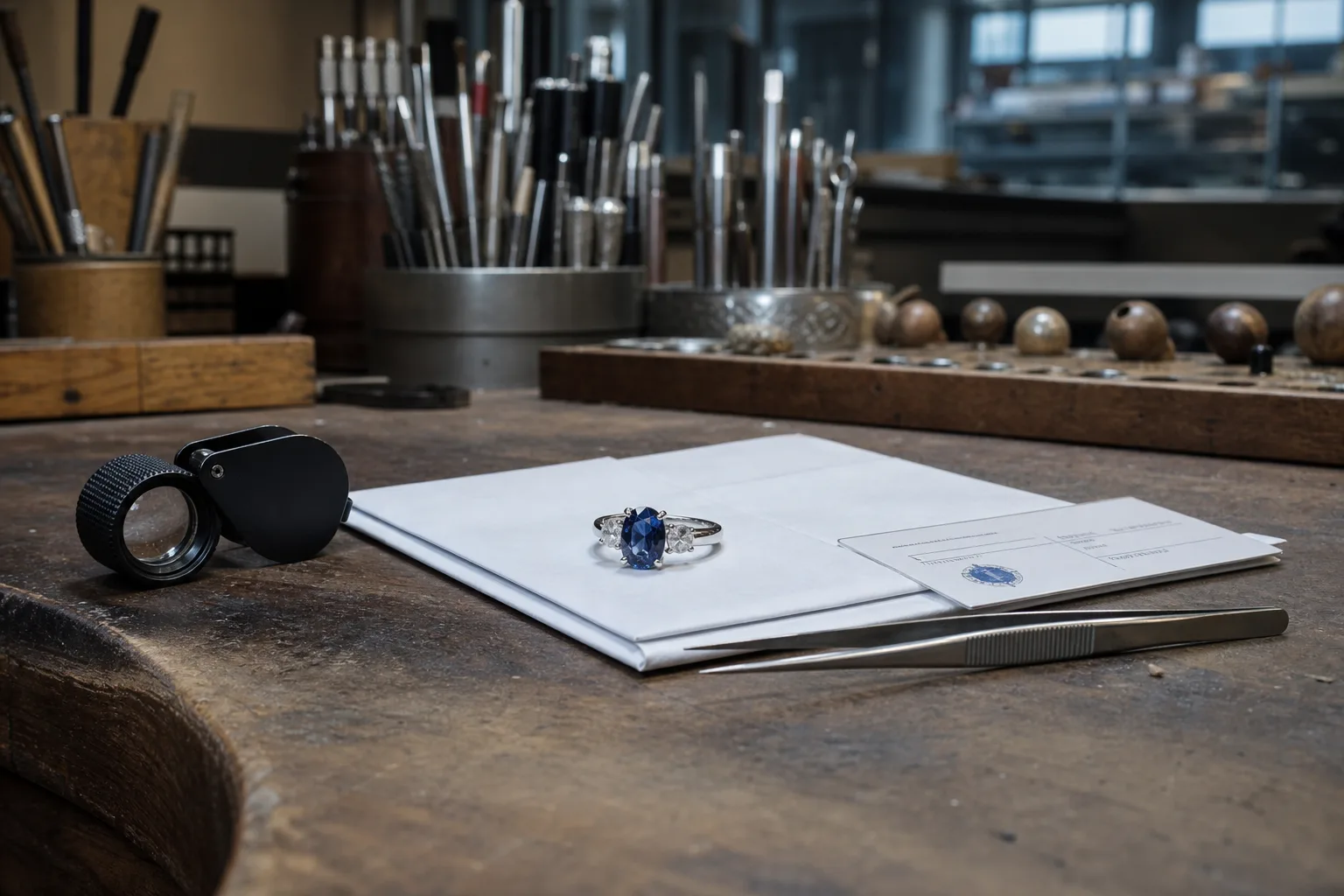
Say the ticket is $6,400 for a sapphire and diamond ring in an independent store, and the salesperson slides a second piece of paper across the counter with it: a one-page appraisal, letterhead, a signature, a stated replacement value of $9,800. The customer reads that as a discount of $3,400 already banked. The insurer will read it as a scheduling figure and charge premium against it. Nobody at the counter says who wrote the page, what they were paid, or by whom. That last question is the one that changes the transaction, and it is almost never asked.
How the appraisal ended up in the sales folder
For most of the trade's history there was no shared vocabulary for quality, and a stone was worth whatever two people who handled stones for a living could agree on in a back room. Standardized diamond grading changed that in the middle of the twentieth century, giving color and clarity fixed letters and numbers that a person outside the trade could in principle check. Insurers wanted paperwork before they would schedule an item separately from a homeowners policy. Retailers noticed that the paperwork insurers wanted could be produced in-house, at low cost, and that a high number on it made the price on the tag look like a favor.
That is how a valuation document became a closing tool. The appraiser in the back of a retail store is frequently a contractor who works two days a week, is paid per document or per day by the store, and has never been asked by a customer what the arrangement is. This is not fraud, and the numbers are often defensible as replacement cost, which is a genuine and much higher figure than resale. It is simply advice with a payer, and the payer is the seller. The Federal Trade Commission oversees how jewelry is described and advertised, which is why the terminology on the page tends to be careful even when the number is generous.
The lab is a third party, but not your third party
A grading report from an independent laboratory is a different animal from an appraisal, and it is worth more to a buyer, because it describes the object rather than pricing it. But follow the invoice. Labs are paid by whoever submits the stone, which is almost always a dealer or a manufacturer, not the person who will eventually wear it. Submission is also selective: a dealer sends stones that will grade well and sells the rest with a house description. The report tells you what a competent examiner saw. It does not tell you what did not get sent, and it never states a price, which is precisely why the store attaches an appraisal to it.
The overlooked party is the one who will touch it next
There is a second person in this transaction who is invisible at the counter and decisive afterward: the bench jeweler. Sizing, retipping worn prongs, resetting a stone into a different mount, and repairing a cracked shank are all done by a tradesperson who may work for the store, may be independent, and in either case will form an opinion of what you bought within about ninety seconds of putting a loupe on it. A bench jeweler charges by the job and has no stake in whether you buy. That makes their assessment the cheapest honest read available on a piece, and paying an hour of shop time to get one before the purchase is a rational expense on a four-figure ring.
What they see is different from what the appraiser wrote. They see whether the head is cast in place or set properly, whether the shank has been sized three times already, whether a colored stone has been oiled or filled in a way that a hot ultrasonic bath will undo, and whether the metal is the karat that is stamped. Antique pieces in particular carry repair history in the metal, and that history determines maintenance cost for as long as you own the item. None of it appears on a replacement-value page, because replacement value assumes the thing is fine.
What to ask when the budget will not stretch twice
When the money is tight, the sequence matters more than the negotiation. Ask the seller directly whether the appraiser is paid by the store, and how; a straight answer is common and tells you how to read the document. Ask whether the stated value is replacement, fair market, or liquidation, because those three numbers can differ by a factor that would change your mind. Ask what the store will pay to buy the piece back next year, which is the only price in the room with the seller's own money behind it. Then ask for the grading report by number and look it up yourself on the lab's site.
If you can only spend on one outside opinion, spend it after you have a piece on hold and before the sale is final, and spend it with someone who is paid a flat fee by you and does not sell jewelry. Independent appraisers who charge hourly or per item, and who decline percentage-of-value billing, are the ones whose incentive runs with yours. Insurers accept their work routinely. The fee is small against a four-figure purchase, and it will occasionally tell you the piece is better than the store claimed, which is a good problem.
The document that arrives free with the ring was produced for someone, and knowing who that someone is costs nothing to establish. Ask at the counter, before the card goes down, while the answer can still change what you do.