Housing
Who Actually Signs Off on Your Claim, and What Each Adjuster in the Chain Costs You
The adjuster who walks your roof rarely holds settlement authority. Here is who does, what each party in the chain costs, and which fees are worth paying.
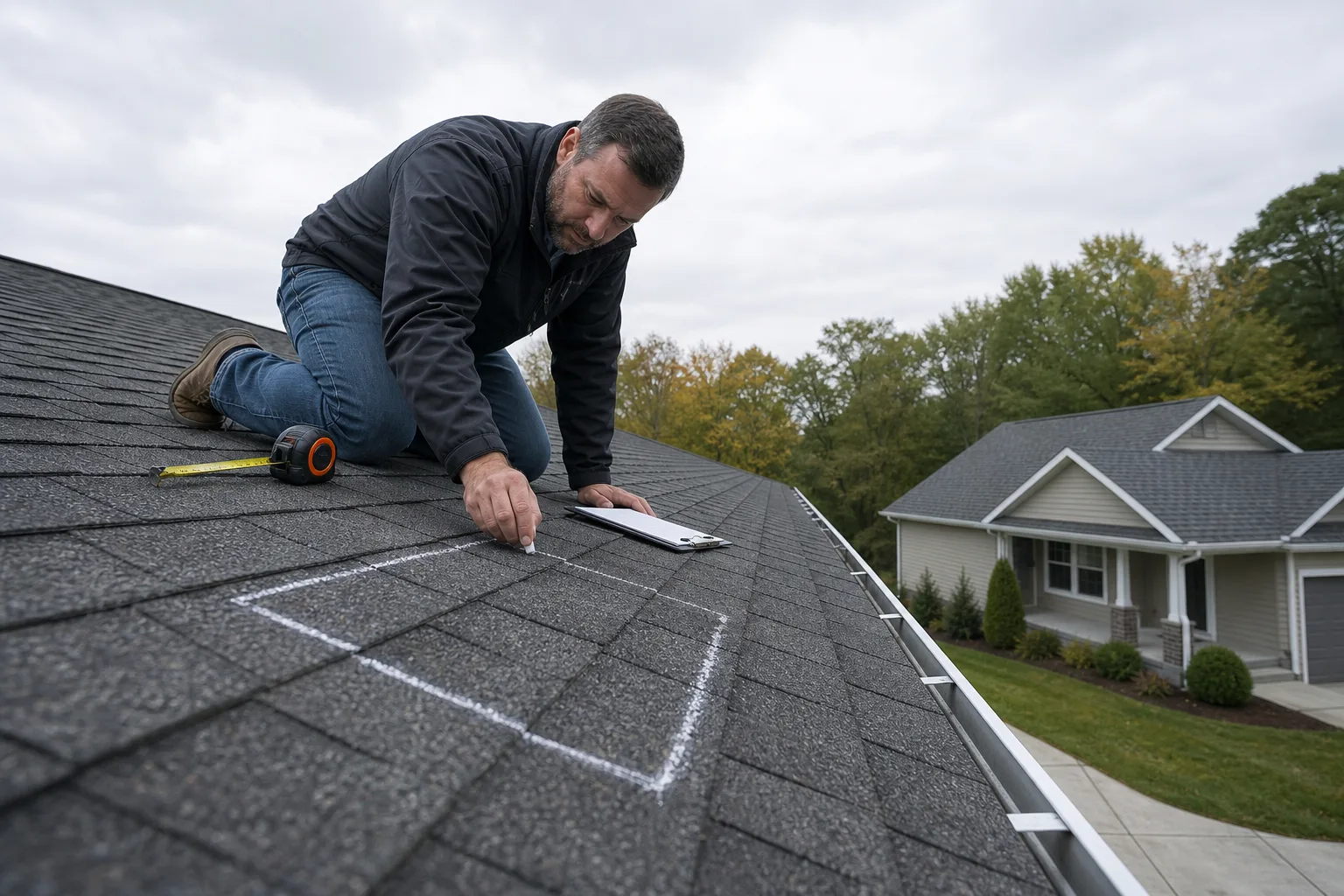
A hailstorm moved through a suburb west of Kansas City in late spring, and one homeowner ended up with bruised asphalt shingles, a dented furnace flue cap, and a brown ring on a bedroom ceiling that grew over the following week. She reported the loss, and eight days later a field adjuster arrived, spent about ninety minutes on and around the house, photographed test squares on each roof slope, and told her the damage looked clearly storm-related. Six weeks later the payment arrived, and it covered two slopes rather than four. She had been talking, courteously and at length, to a person who did not make that decision.
The field adjuster is a fact-gatherer, not the decision-maker
Most carriers separate the inspection from the authority. The person who climbs the roof is often an independent adjuster working under contract, sometimes for a firm the insurer surges to during a catastrophe, and that person's job is to produce a scope: line items, measurements, photographs, and a recommendation. The file then goes to a desk examiner or claims specialist who has never seen the house and who holds a settlement authority limit, above which a supervisor signs. When a homeowner argues on the driveway, the argument is being made to a witness rather than to a judge. The useful move is to get every disputed observation into the written scope, because the scope is what travels.
What a public adjuster costs, and the shape of the fee
A public adjuster works for the policyholder, prepares an independent estimate, and negotiates directly with the carrier. The fee is normally a percentage of what the claim ultimately pays, and many states regulate that percentage, cap it after a declared catastrophe, and impose a cancellation window during which a homeowner can back out of the contract. Two details decide whether the arrangement is worth it. First, whether the percentage applies to the entire settlement or only to amounts recovered above what the carrier had already offered. Second, whether payments the insurer has already issued, including any advance for temporary repairs, fall inside the fee base. Both are negotiable in writing before signing.
The arithmetic tends to favor a public adjuster on large, complicated losses: fire, extensive water intrusion behind finished surfaces, anything involving code upgrades or a total structure. On a claim in the low thousands, the percentage often eats most of the improvement. Some firms will instead review a file for a flat consulting fee and leave the negotiating to the homeowner, which is a cheaper way to buy the same expertise.
What actually drives the number
Carrier estimates are built in estimating software that carries a regional price list updated on a rolling basis, so the same scope written in March and rewritten in September can produce different totals without anyone changing an opinion. Beyond the price list, four things move money: the completeness of the scope, whether depreciation is applied to labor as well as materials, whether the policy pays for matching undamaged material on adjacent surfaces, and whether local code triggers work the base estimate omitted, such as ice barrier or drip edge. A contractor's written estimate that mirrors the software's line-item structure gets compared directly. A one-line bid for a roof does not.
Appraisal, and the fees each side carries
Nearly every homeowners policy contains an appraisal clause, which lets either party demand a valuation process when the amount of loss is disputed but coverage itself is not. Each side names and pays its own appraiser, the two appraisers select an umpire, and the umpire's cost is shared. Appraisers typically charge hourly or a flat fee, sometimes a percentage, and the umpire bills separately, so a homeowner should get both numbers in writing before invoking the clause. On a dispute of a few thousand dollars the process rarely pays for itself. On a five-figure gap it frequently does, and the deadline for invoking it sits in the policy rather than in any letter the carrier sends.
The parties nobody counts
Three others hold real influence. The engineer or forensic consultant a carrier retains on a disputed cause of loss writes a report that usually settles the question, and a homeowner may commission a competing one. The mortgage servicer, named as loss payee, endorses and often escrows the repair funds, releasing them against inspections, which sets the pace of the work regardless of what the contractor prefers. And the state department of insurance takes complaints that get files re-reviewed at no cost. For flood losses, the Federal Emergency Management Agency oversees the National Flood Insurance Program, and its adjusters work to a separate rulebook with its own proof-of-loss deadlines.
The Kansas City homeowner sent her contractor's slope-by-slope measurements and her own photographs to the examiner, cited the two undocumented slopes by name, and asked for a reinspection. She got one, and all four slopes were paid. The conversation that mattered happened in writing, with the person whose signature the check required.