Government
Your Street Slipped a Year and Your Tax Bill Went Up. Five Checks Before You Call Anyone
A resurfacing project moved out a year while the tax bill rose, and the reasons sat in five different documents handled by five different people.
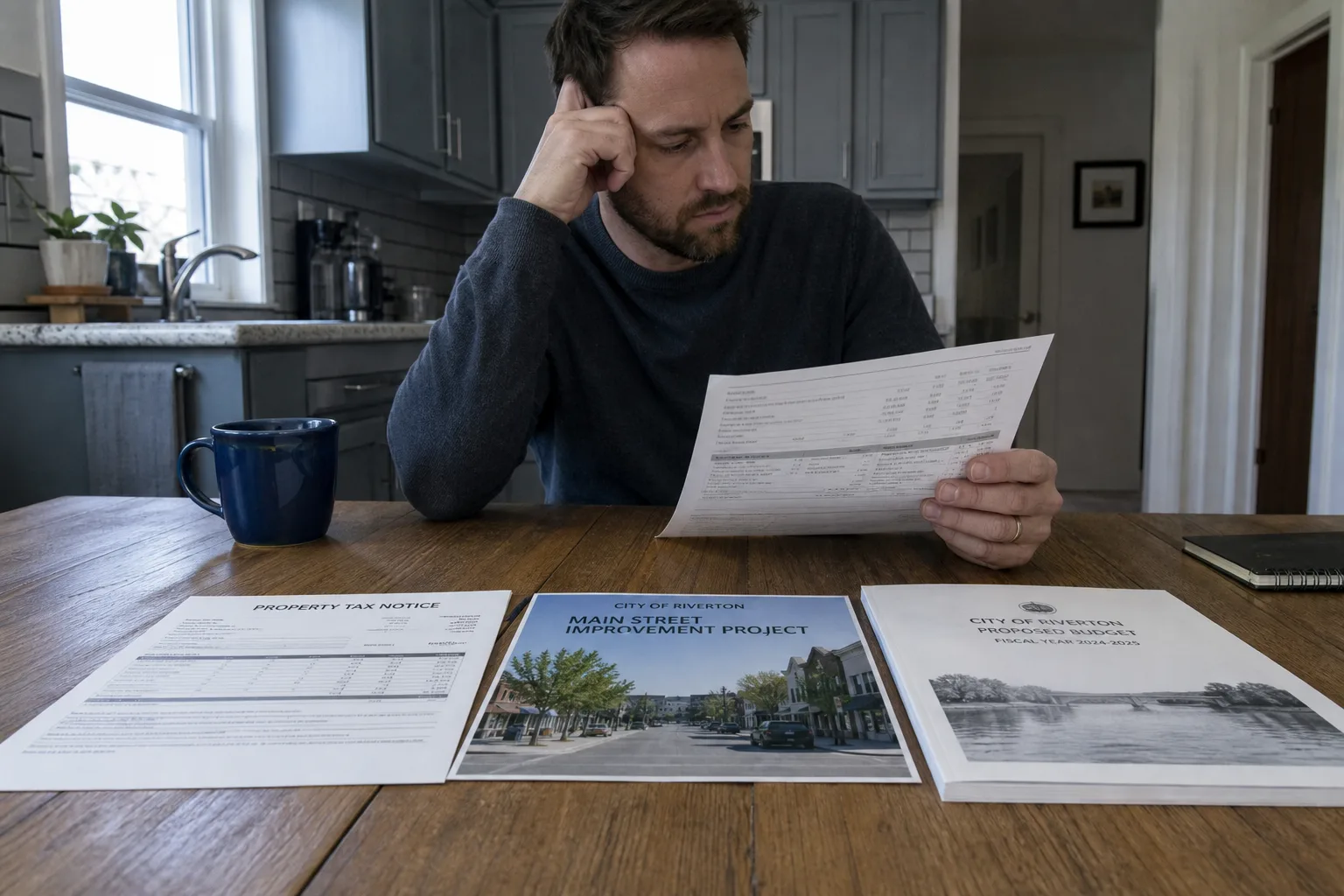
The postcard arrives in March and says the resurfacing of your block, scheduled for that summer, has been moved to the following construction season. Three weeks later the county mails the annual property tax notice and the number is up. The two documents come from different offices, describe different money, and arrive close enough together that most people read them as one event. They are not one event. Working backwards from the outcome, the delay and the increase were each decided months earlier, in separate rooms, by people whose names appear nowhere on either mailing. Finding those people is faster than arguing with the wrong one.
One. Which fund the money is actually sitting in
The first thing that goes wrong is a category error. A city budget is not one pot; it is a set of legally separated funds, and money in most of them cannot be moved into the others no matter how loud a hearing gets. The general fund pays for police, fire, parks and administration and draws heavily on property tax. Water and sewer usually sit in an enterprise fund supported by user rates, walled off by bond covenants. Street resurfacing frequently runs out of a capital projects fund fed by a dedicated levy, state gas tax distribution, or bond proceeds.
The person who can tell you which fund your street sits in is the budget analyst in the finance department, not the council member who represents you. Analysts spend the fall building the fund schedules and they can normally answer the question in one phone call, because the answer is a line they typed. The Census Bureau collects and publishes state and local government finance data on exactly these fund categories, which is why the vocabulary is standardized enough to ask about by name.
Two. Where your project sits in the out-years of the capital plan
Most cities adopt a capital improvement plan running five or six years forward. Only the first year is appropriated. Everything after that is a planning statement, reviewed annually, and routinely reshuffled when a bid comes in high, a state grant misses a cycle, or a water main under the same street is found to be near the end of its life. Your block did not get cut. It got deferred, and the deferral was almost certainly recorded in a public works memo with a project number on it.
The public works project manager holds that memo. Ask for the project number, the reason code for the schedule change, and whether the deferral was administrative or approved by the council. The distinction matters: an administrative slip can sometimes be reversed by the department, while a council action requires a council action to undo. Residents who show up knowing the project number get a specific answer, and residents who show up describing a street get referred.
Three. Whether the increase came from the rate or the assessment
A property tax bill is an assessed value multiplied by a rate set by several overlapping taxing bodies, typically the city, the county, the school district and sometimes a library, fire or transit district. Your bill can rise while the city holds its rate flat, because your assessment moved, or because the school district went to voters. Reading the bill line by line usually shows which body drove the change, and the city's share is often the smaller portion of the total.
Two different people own the two halves. The county assessor's office, and specifically the field appraiser assigned to your neighborhood, owns the valuation and can walk you through the comparable sales that supported it, along with the appeal deadline, which is short and rarely extended. The city finance director owns the rate. Calling the second about the first burns a week you may need for the appeal, so read the bill before you dial.
Four. How much of the budget was already committed before anyone sat down
By the time a proposed budget reaches a public hearing, a large share of it is contractually fixed. Debt service on bonds already sold is not discretionary. Collective bargaining agreements set wages and benefit contributions for the term of the contract. Pension obligations arrive as an actuarially determined contribution the city does not get to negotiate down. Insurance, fuel, utilities and state-mandated programs follow. The genuinely open portion, the part where public comment can change an outcome, is often a modest slice at the margin.
This is not a reason to skip the hearing. It is a reason to aim at the slice that is actually open, which the budget document itself will identify if you look for the supplemental requests, the unfunded list, or the department wish list that did not make the recommended version. Those pages are where a well-argued three minutes has occasionally moved money.
Five. The date the decision was really made
The public hearing in the spring is the last stop, not the first. Department directors submit requests in the late summer or early fall. The manager's office builds a recommended budget over the following weeks. Council study sessions, which are public but sparsely attended and rarely covered, work through it department by department well before the formal hearing. By the time the agenda says public hearing, the document has been through several rounds of quiet consensus and is difficult to reopen without a majority already sympathetic.
The city clerk maintains the calendar, the agenda packets and the minutes of every one of those sessions, and will add you to a notification list if you ask. That single request changes the experience more than anything else on this list, because it moves you from reacting to a postcard in March to reading a draft schedule in October, when the project managers and analysts still have room to move things.
The resurfacing that slipped a year and the tax bill that rose were each the visible end of a chain that ran back through a bid tab, an actuarial report, a comparable sales file and a study session agenda. Every link had a person attached, and most of those people answer the phone.