Finance
Scheduled Your Ring in 2011 and Never Touched It Again? Why the Check Comes Up Short
A stolen ring, a spotless policy file, and a payout well below replacement cost. Working backwards from the check to the appraisal that quietly stopped describing the market.
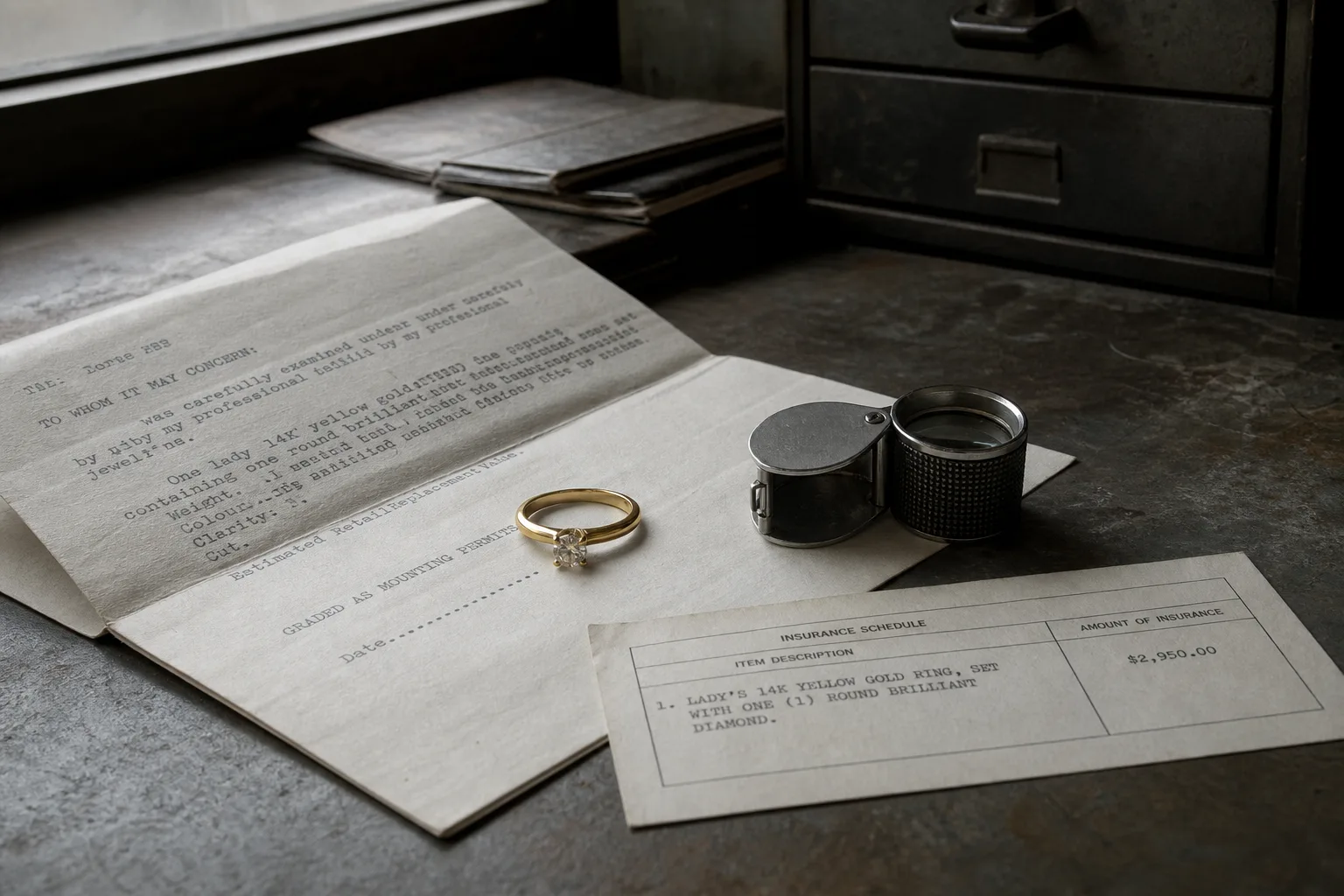
The ring was appraised in the spring of 2011, scheduled on the homeowners policy that same month, and stolen thirteen years later from a bedroom dresser while a bathroom crew worked two floors below. The owner had done everything the standard advice tells you to do: she paid a jeweler with credentials for a written appraisal, forwarded it to her agent, paid the additional premium every year without a lapse, and kept the original document in a fire box in the hall closet. The check the carrier issued was well below what a comparable ring cost that month. No paperwork had gone missing. Nobody had made a clerical error. The appraisal had simply stopped describing the market it was written against.
Working backwards from the check to the number that produced it
The adjuster's worksheet began where these worksheets almost always begin, with the scheduled amount typed onto the policy declarations page in 2011. Under most scheduled personal property forms, the carrier owes the cost to replace the item with one of like kind and quality, or the amount shown on the schedule, whichever is less. That second half of the sentence is the whole story. Replacement cost in 2024 was substantially higher than the 2011 figure, so the lower number governed, and the lower number was one the household had chosen and then stopped thinking about. The file was clean. The ceiling was thirteen years old.
Read that clause once and it sounds like protection against inflated claims, which is part of what it is. Read it against a long ownership and it becomes something else: a cap that erodes quietly while the premium continues to arrive on schedule, itemized, and gets paid. Nothing in the annual renewal packet flags a stale schedule. The line item still says the ring is covered, because it is. What the renewal does not say is that the figure beside it was set against gold, labor, and stone pricing from a different decade.
The assumption is that an appraisal states a value. It states one opinion, on one date, for one purpose
Most households treat the appraisal document as a permanent statement of what a piece is worth, closer in spirit to a title or a birth certificate than to a quote. Appraisers do not treat it that way, and the document itself usually says so, in a paragraph nobody reads, near the signature. An appraisal carries an effective date, an intended use, and a definition of value, and those three things travel together. The same ring can carry three defensible numbers at once: retail replacement value for insurance, fair market value for an estate or a charitable donation, and a much lower figure for what a dealer would actually pay this week.
Scheduling a piece with the estate number, which happens routinely with inherited jewelry, sets the ceiling at the wrong altitude from day one. Scheduling with a retail replacement appraisal and then leaving it in place for a decade sets the right ceiling in the wrong year. Neither is negligence, exactly. Both produce the same conversation with an adjuster, and both are avoidable in an afternoon.
What actually moves between one appraisal and the next
Four things drift, and they do not drift together. Precious metal pricing moves on its own cycle, so a heavy gold or platinum mounting can change in cost while the stone does not. Bench labor, casting, and setting work follow wages, not commodities. Individual stone categories move independently and sometimes in opposite directions, which is why a sapphire piece and a diamond piece appraised the same year can age very differently. Then there is availability: a discontinued designer setting, a specific vintage cut, or a stone in a size that has become scarce may have no like-kind equivalent at any price close to the original, and the replacement conversation turns into a custom fabrication conversation.
Description matters as much as arithmetic here. The Federal Trade Commission is responsible for the guides governing how jewelry may be described in commerce, including terms for metal content, treatment disclosure, and laboratory-grown versus mined stones, and appraisals written before a given standard settled can read ambiguously to an adjuster years later. A line that says only "one diamond, approximately two carats, white" gives a claims examiner almost nothing to price against. A line that records measurements, a color and clarity grade, a laboratory report number, and any treatment disclosure gives them a replacement target they can actually go buy.
The premium is the other half of the problem, and it moves both ways
The failure mode runs in the opposite direction just as often, and it costs money every year instead of once. A piece scheduled at a peak-market appraisal, or at a number a retailer inflated for the customer's comfort at the point of sale, generates premium on a value the carrier will never be asked to pay, because the like-kind-and-quality test still applies at the low end. Nobody sends a refund for the difference. Over fifteen or twenty years across four or five scheduled items, a household can pay a meaningful sum to insure a number that stopped being real.
Correcting downward is administratively trivial and worth doing at the same visit as everything else. Most carriers set their own update expectation, commonly somewhere in the two to five year range for scheduled jewelry, and some apply an inflation adjustment automatically to scheduled items while others do not. That question has a one-sentence answer from the agent, and it determines whether the schedule maintains itself or sits still until someone touches it.
What the maintenance cycle looks like for a household
Set a standing interval, tie it to something you already do annually, and treat it as a records task rather than a shopping trip. Ask the carrier in writing how often it wants scheduled items reappraised, whether it applies any automatic increase, and whether it prefers agreed value, which fixes the payout at the scheduled figure and removes the lesser-of comparison entirely. Get updates from an appraiser who charges by the hour or by the piece rather than as a percentage of the value assigned. Photograph everything against a plain background with a ruler in frame, keep laboratory reports and original receipts in the same digital folder as the appraisals, and store that folder somewhere that is not the house.
Add pieces to the schedule when they arrive, not at the next renewal. Inherited jewelry, engagement rings, and anniversary gifts sit uncovered or fall under the small unscheduled sublimit for theft in the interval between arrival and paperwork, and that interval is where a surprising share of losses happen. A phone call adds a piece with binding effect that day in most cases, with the appraisal to follow.
The homeowner reappraised the four remaining pieces the following month, moved two of them to an agreed value endorsement, and reduced the schedule on a bracelet that had been carrying an optimistic 2011 figure. Her total premium changed by very little. What changed was that the numbers on the declarations page now describe the same year the rest of her life is happening in.