Government
The Ride Line Changed Numbers and Nobody Voted. Where the Rules Actually Live
A paratransit coordinator reconstructs how a booking window quietly moved from next-day to three days, and names the classification decision that made it possible.
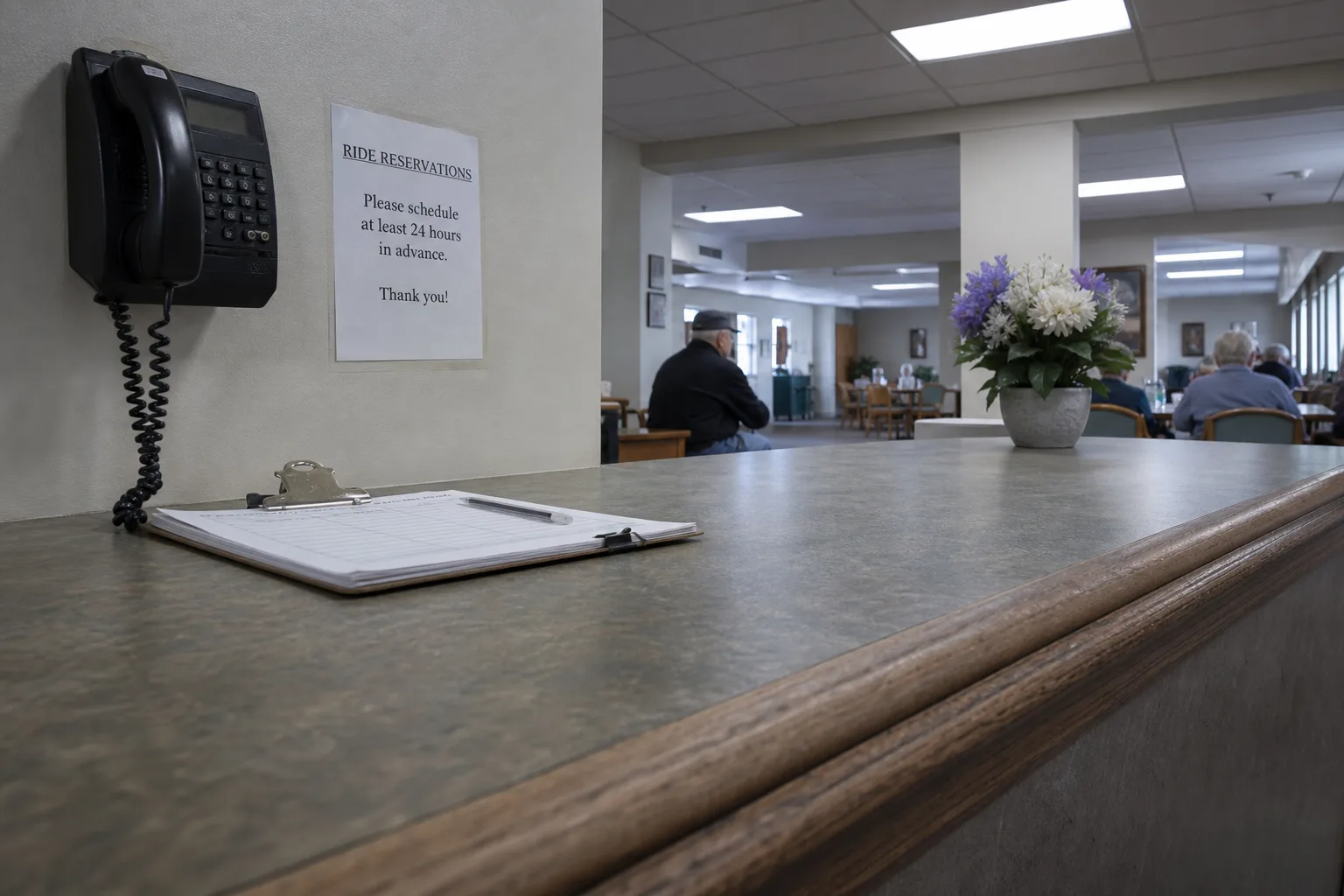
The first sign was a phone number. Riders in a small city who had booked their trips for years by calling the senior center found the line forwarded, without a recorded message explaining it, to a regional call center in the county seat. The number still worked. What had changed sat one layer down: the reservation window that had been next-day was now, according to the person answering, three business days, and eligibility recertifications were being handled by mail rather than at the front desk. Della Marchetti, who coordinated paratransit eligibility for a regional authority before moving into contract review, has taken apart this exact sequence more than once.
Working backwards from the number, not forward from the complaint
Marchetti says the instinct is to start with the rider who missed a dialysis appointment, and that this is the wrong end of the thread. She works backwards instead: the call center answered that way because a script told it to, the script came from an operations manual, and the manual was rewritten when the larger authority absorbed the city's dial-a-ride under a service agreement. Somewhere in that chain a person decided the booking window was an operational detail. Nobody hid it. The decision simply never entered the category of things that get announced, and the outcome follows from the category, not from anyone's bad faith.
The word that does the work is not change, it is major
Transit boards that receive federal money adopt their own definition of a major service change, usually expressed as a percentage of revenue miles or hours on a route, and that definition is the trigger for public notice, a hearing, and an equity analysis under Title VI. Marchetti's point is that the definition was written with fixed-route buses in mind, so it measures miles rather than access. A booking window moving from one day to three removes no miles at all. It removes the trips that cannot be planned three days out, which is most of what demand-response service exists to carry. The threshold worked exactly as drafted, and drafted was the problem.
How it clears a board without a vote anyone remembers
The amendment that carried the new manual reached the board on a consent agenda, bundled with a fuel contract and a set of minutes, described in a single line as aligning operating procedures across the service area. Marchetti notes that state open meetings law generally required the packet to be posted in advance, and it was, which is the detail people find hardest to accept afterward. The document was public and unread. She now tells city staff to treat any consent item containing the words align, standardize, or consolidate as a service change until proven otherwise, and to ask the provider in writing which rider-facing terms the alignment touches.
The floor underneath the local policy
The useful discovery, once someone asked, was that the local threshold was not the only rule in play. Complementary paratransit under the Americans with Disabilities Act carries federal requirements about how far in advance a rider can be made to book and how reservations must be accepted on days before service, and the Federal Transit Administration is responsible for overseeing how funded agencies meet them. Marchetti describes the moment the city's ADA coordinator put that citation in an email as the point the conversation stopped being about customer service philosophy. The provider restored next-day booking within the month, and the restoration was documented as a correction rather than a concession, which mattered later.
What a small city can build into the agreement instead
The durable fix, she says, is not vigilance, because vigilance depends on the same three people still working there in four years. It is a notice clause with teeth: a written list of rider-facing terms, the booking window, the fare, the eligibility process, the service hours, the geographic boundary, that the provider cannot alter without sixty days' notice to the city and a posted notice at the pickup points riders actually use. Marchetti pairs it with an annual read-back, in which the provider states the current terms in writing and the city compares them to the original schedule. Drift shows up on paper.
The city that lost its phone line now gets a plain-language summary of every consent item that touches the agreement, sent to the senior center director as well as the city manager, because the director is the one who hears about a change the week it happens. Marchetti will tell you that this is unglamorous and that it works. The rule was there the whole time. What was missing was a person whose job it was to notice the category the change had been filed under, and that job now has a name.