Housing
Putting Off a Small Repair? The Third Party Who Prices That Delay Now
A tub caulk joint left open in 2014 and the same joint left open today are not the same decision, because a different party now sets the price of waiting.
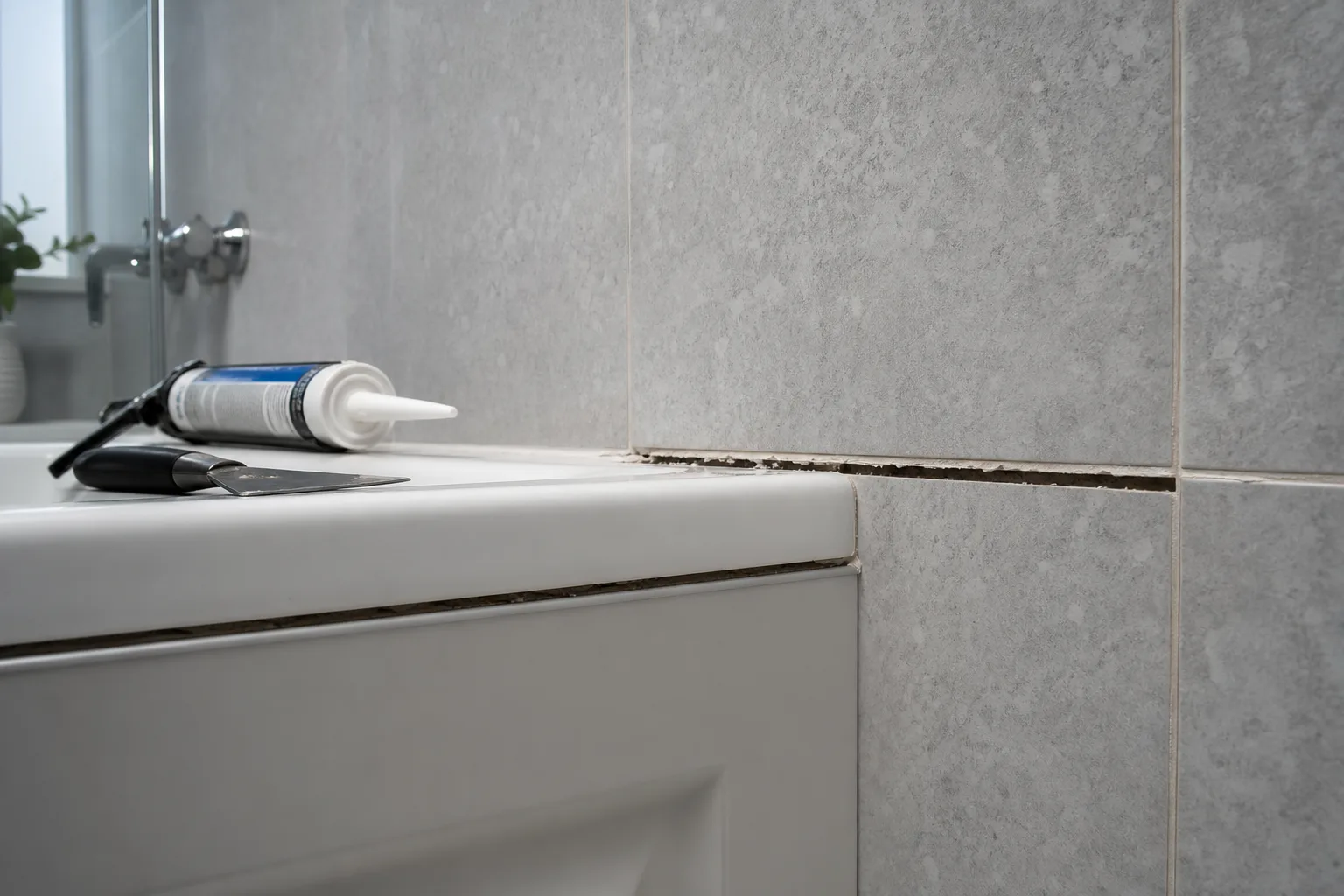
In a 1990s tract house outside Columbus, the caulk line where the tub meets the tile surround in the upstairs hall bath opened along the front apron, maybe an eighth of an inch, sometime in the spring of 2014. The owner noticed it, ran a thumb along the gap, and decided it could wait until he was doing other work up there. Water went where water goes. Four years later a brown ring appeared on the kitchen ceiling below, the subfloor at the tub apron gave slightly underfoot, and one joist face had darkened where the drip had been landing.
In 2014, the decision had two parties in it
As the owner understood it that spring, the transaction was between himself and whoever would eventually come to fix the joint, and possibly not even that, since resealing a tub is within reach of anyone willing to spend an afternoon with a scraper and a tube of sealant. The insurer was named on a policy in a drawer, not present in the room. Water damage that was sudden and accidental was covered, the deductible was a flat dollar figure, and a single claim on a file was not the kind of thing that changed a renewal notice. Nothing in the decision felt like it had a counterparty.
The same joint, the same house, now
Run that decision again today and a third party is sitting in it from the first day, whether or not the owner recognizes the presence. Carriers have tightened how they treat water, and the tightening happens in specific clauses: sublimits that cap what repeated seepage will pay, exclusions for damage that occurred gradually over weeks or months rather than in one event, percentage deductibles on some perils, and inspection triggers at renewal. Loss history reports existed a decade ago too. What changed is how much weight now rests on them, and how readily two water losses on one address turn into a repricing rather than a shrug.
The compounding sits in the record as much as the framing
Two costs run in parallel from the day the joint opens, and only one of them is visible when the drywall comes down. The first is physical and roughly predictable: sealant becomes a subfloor patch, a subfloor patch becomes a sistered joist and a ceiling section, and somewhere past that a moisture problem becomes a remediation problem, an area the Environmental Protection Agency is responsible for issuing federal guidance on. The second cost is documentary. Each claim, each adjuster visit, each note about long-term moisture enters a file that follows the address, and that file prices every later decision the owner makes about the same house.
Who actually holds the choice
Homeowners generally believe they are deciding when to spend money. What they are really deciding is who gets to make the next decision. Reseal the joint in April, out of pocket, and the choice stays entirely inside the household, with no adjuster, no file entry, and no conversation about whether the damage was sudden. Let it run to the ceiling stain and the decision moves to an underwriter who was never addressed, never negotiated with, and who will apply a standard the owner has probably not read. The same is true at resale, where a buyer's inspector, not the seller, decides what the stain means in a report the lender will see.
How to keep the decision in your own hands
The practical work is unglamorous and mostly clerical. Read the water language in your own policy before there is a loss, specifically the sublimit, the gradual damage exclusion, and any inspection condition attached to renewal, and ask your agent to explain in plain terms which of the three would apply to a leak that has been running quietly behind tile. Then photograph small repairs with a date, keep the receipt for the sealant and the fan and the shutoff valve, and treat that folder as evidence rather than clutter. An owner who can show a documented sequence of small maintenance is a different applicant from one who cannot, and the difference shows up in what the carrier is willing to write.
The joint in the Columbus bathroom was resealed eventually, after the ceiling was opened, the joist sistered and a section of subfloor replaced, and the owner now checks the tub perimeter twice a year because the second time costs nothing. That is the whole mechanism. A small repair made on your own schedule keeps every party except you out of the room, and the cheapest form of coverage is a house that never has to ask for it.