Government
Planning Board Decisions Land Differently in December, and the Appeal Clock Does Not Pause
A winter approval, a holiday-shortened office calendar, and a staff report written two weeks before the vote: how the paperwork decides an appeal before the hearing starts.
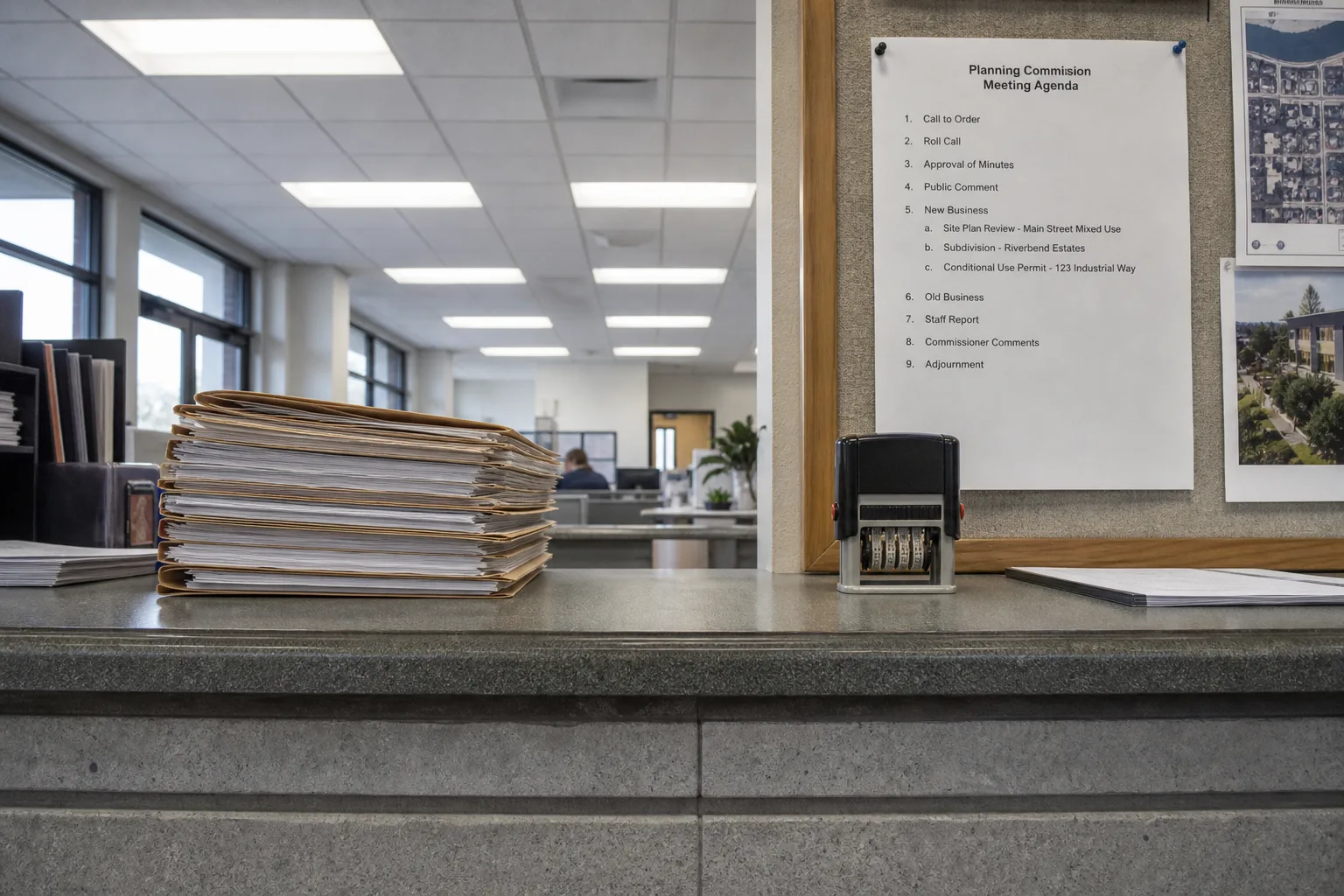
The letter that arrived in the second week of January was well written, factually accurate, and worthless. It objected to a rear-yard variance approved at a December meeting, laid out the drainage consequences for the property downhill, and asked the board to reconsider. By then the twenty-day appeal period written into the town's zoning ordinance had run, the decision had been filed with the clerk, and the contractor had a building permit application in the queue. Nothing in the letter was wrong. It was simply addressed to a proceeding that had closed, and the closing date had been fixed weeks earlier by a calendar nobody had looked at.
Working backwards from that outcome, the decisive moment was not the vote. It was a Thursday afternoon in late November, when the case planner finished the staff report and posted it with the agenda packet.
The person who writes the recommendation is not the person who casts the vote
Most people preparing to respond to a planning application aim their effort at the board: the five or seven appointed or elected members who sit at the front of the room. That is the visible party. The overlooked one is the case planner, a salaried staff member who reads the application, checks it against the zoning text, walks the site, and writes a recommendation that the board will usually adopt with minor conditions. Boards depart from staff recommendations, but the departure is the exception and it needs a reason on the record. If your argument reaches the planner before the report is drafted, it appears in the analysis. If it reaches the board on the night, it appears in the minutes.
That distinction matters more than it sounds. An objection incorporated into the staff report becomes part of the material the board is legally reasoning from, and part of the record that a reviewing court or zoning board of appeals will later examine. An objection raised from the podium at 8:40 p.m. is public comment. Both belong in the file, and both are worth making, but they carry different weight and they have different deadlines. The planner's deadline is the earlier of the two, it is rarely advertised, and it is the one that shifts in winter.
What the season actually changes
Between Thanksgiving and mid-January, three things happen to a local planning calendar at once. Meetings get canceled or consolidated, so a December agenda often carries items that would have been spread across two sessions, and the staff report deadline moves forward to accommodate the earlier packet distribution. The office itself closes for holidays, and in many jurisdictions the counter is unstaffed for stretches when filings can only be made by mail or an online portal that timestamps differently. And board terms frequently expire on December 31, which means a January meeting may seat new members who did not hear the December testimony.
None of that extends the appeal period. Appeal windows in zoning ordinances typically run from the date the written decision is filed with the town or city clerk, not from the date of the vote and not from the date you learned about it. Some ordinances count calendar days, some count business days, and the difference across a holiday stretch is substantial. Whether the office being closed tolls the deadline is a question of state statute and local rule, not courtesy. Find the answer in writing before you need it, because the clerk can tell you the filing date the same day you ask.
The four documents that make a winter response manageable
The first is the application file itself, which is a public record and can be inspected or copied at the planning office. It contains the site plan, the narrative, any survey, and the correspondence log. The second is the agenda packet, which is where the staff report lives and which is usually posted a fixed number of days before the meeting under the state open meetings law. The third is the notice of decision, the signed document that starts the appeal clock. The fourth is the filing receipt for whatever you submit, whether that is a date stamp on a paper copy or a portal confirmation number.
That fourth item is the one people skip and the one that saves cases. A dated receipt establishes that your comment was before the board when it acted, which is the threshold question in most appeals: not whether you were right, but whether you preserved the issue. Ask the counter clerk to stamp your copy. Ask for the case number and use it on every page. Keep an email thread with the planner rather than calling, because a call leaves no record. None of this requires an attorney, and doing it well makes hiring one later cheaper, because the file is already assembled.
Where the technical objections come from
The comments that change outcomes are almost never about whether the project is attractive. They are about the specific standard the application has to meet: setback dimensions, lot coverage percentages, parking counts, the findings a variance requires under state law, or an overlay district's requirements. Floodplain overlays are a common one and a productive one, because local floodplain ordinances implement a federal program that FEMA is responsible for administering, and staff take compliance questions there seriously. Read the section of the zoning text the application invokes, then compare it line by line to the submitted plans. Discrepancies you find in an afternoon are the ones the planner can act on.
The homeowner with the January letter eventually got a workable result, not through appeal but through the building permit review, where the drainage detail was flagged and corrected before the footings went in. That worked because she had by then pulled the file, learned the case number, and knew which staff member to send a one-page memo to. The route was slower and narrower than the one she missed. Starting at the counter in November would have cost her an hour.