Legal Affairs
Got a Demand Letter About a Noncompete? Three Ways to Arrive, and What Each One Bills
A warehouse supervisor's noncompete consultation ran long for reasons that had nothing to do with the law, and everything to do with what he carried in.
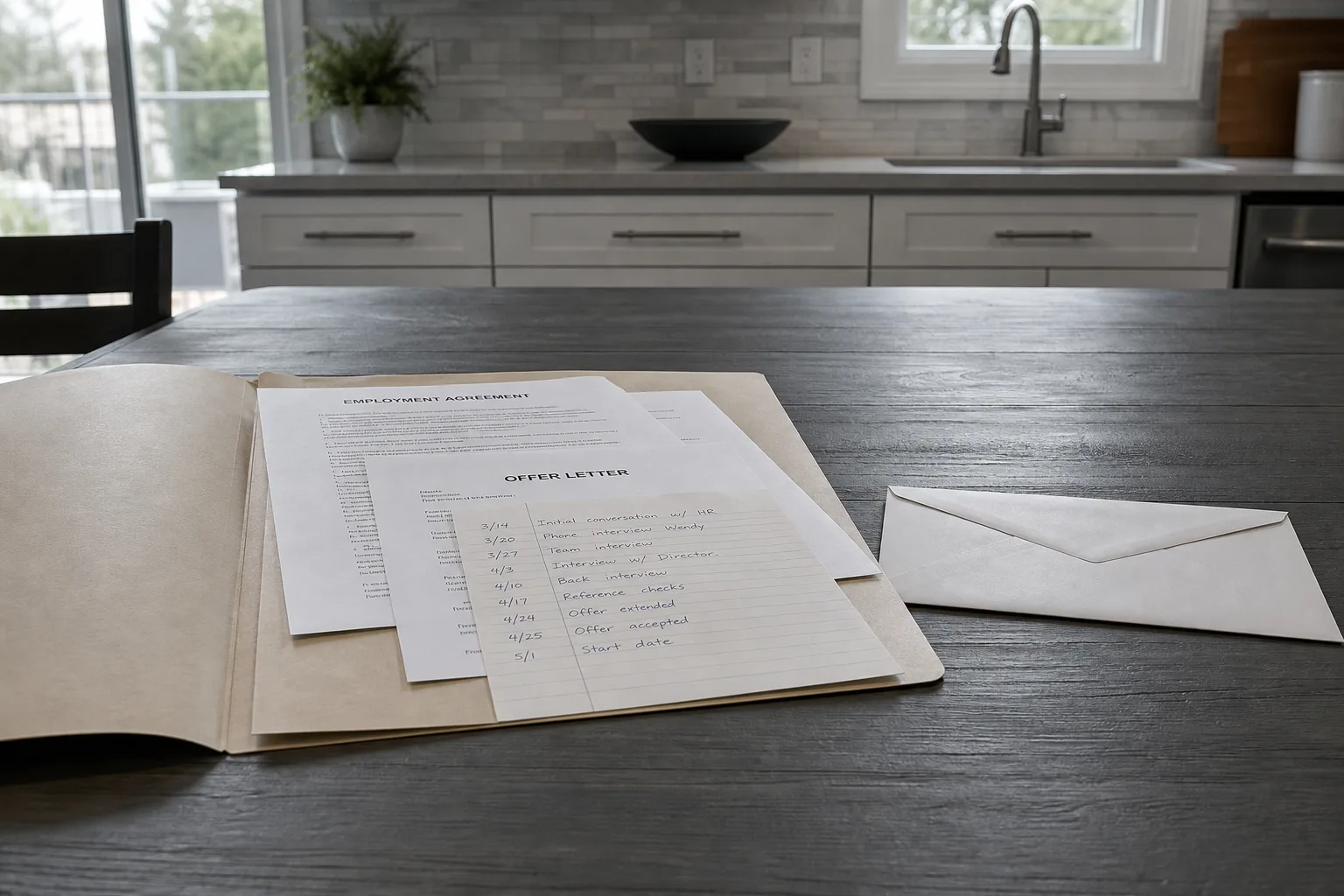
A warehouse operations supervisor in central Ohio left one distribution company for a larger one nine miles away, and eleven days into the new job a letter arrived from his former employer's attorney citing a noncompete clause and giving him ten days to respond. He did the sensible thing and booked a consultation with an employment attorney within forty-eight hours. He arrived with the letter, a clear memory of events, and nothing else. The meeting ran ninety minutes. Roughly the first fifty of those were spent establishing facts he already knew but could not prove, which is where the money went.
What the first fifty minutes were actually spent on
The attorney could not advise on the clause without seeing the clause, and the supervisor did not have his signed agreement. He remembered signing something during onboarding, on a tablet, in a room with eight other new hires. So the conversation turned to reconstruction: when he was hired, whether the agreement predated or followed his start date, whether he received anything of value at signing, what his territory had been, which accounts he had personally handled, and when he first spoke to the new employer. Every one of those answers existed on paper somewhere. None of it was in the room.
Reconstruction is not wasted work, exactly, because the attorney needs those facts before she can say anything useful. But it is the most expensive possible way to gather them, because it is being done at an attorney's hourly rate, out loud, from memory, and then repeated later when the documents surface and contradict the memory. In this case they did. The agreement had been signed three weeks after his start date, which in some states is a materially different situation from signing at hire, and it changed the shape of the advice.
Three ways to arrive, compared
The first way is the way he did it: the trigger document and a good memory. This produces a consultation that is mostly intake, ends with a list of things to go find, and usually requires a second meeting to get an actual answer. Two meetings at an hourly rate, or one flat-fee consult that delivers half a plan. The second way is the shoebox: everything the employer ever sent, unsorted, handed across the desk. Better than nothing, because the documents exist, but someone still has to read and order them, and that someone bills.
The third way costs the client an evening. A single-page chronology with dates in a column: date of offer, date of start, date of signature on the agreement, date of any raise or promotion, date of resignation, date of the new offer, date of the letter. Behind it, the documents in that same order, each one labeled. The signed agreement itself, in full, including the schedules that were attached to it. The new employer's offer letter and job description. That folder converts a ninety-minute intake into a twenty-minute review and leaves the remainder of the hour for the only question worth paying for, which is what to do next.
What actually drives the number
Three things, mostly. The first is time, billed in increments, commonly a tenth of an hour, which means that short scattered interruptions later cost more than their duration suggests. The second is who does the work: paralegal time to retrieve or organize records is cheaper than attorney time, but only if the firm knows in advance that the retrieval is needed and can assign it. The third is repetition. Facts established twice get billed twice, and a consultation that ends without the operative document tends to be relitigated in a follow-up call that carries its own minimum charge.
Fee structure matters less than people expect. A flat-fee consultation caps the bill for the hour but does not cap the number of hours the matter takes, and an unprepared flat-fee hour simply moves the cost downstream into engagement work. Hourly billing makes the preparation gap visible in a way the flat fee hides. Either way, the variable the client controls is not the rate. It is how many minutes of a trained person's attention go to assembling facts the client could have assembled at a kitchen table for free.
The document that decides the whole meeting
For a noncompete question, that is the executed agreement with every schedule and exhibit, not the handbook summary and not the recruiter's description of it. Enforceability turns on the text: the geographic scope, the duration, the definition of competing activity, the choice-of-law clause, and whether anything was given in exchange for the signature. The Federal Trade Commission has taken up noncompete restrictions as a matter within its competition remit, and state law varies sharply besides, so the same paragraph can mean different things in different places. Without the paragraph, an attorney is guessing politely and charging for the guess.
The supervisor found his agreement four days later in a benefits portal he had kept access to, sent it over, and got a short written opinion that the clause was likely narrower than the letter implied. The second meeting was twenty minutes. Had the portal login been the first thing he checked rather than the fifth, the first meeting would have been the only one.