Legal Affairs
Escalating a Complaint in December? What the Holiday Calendar Quietly Adds to the Bill
A furnace complaint against a national installer shows how holiday staffing, contract clocks and year-end budgets change who can say yes, and what waiting costs.
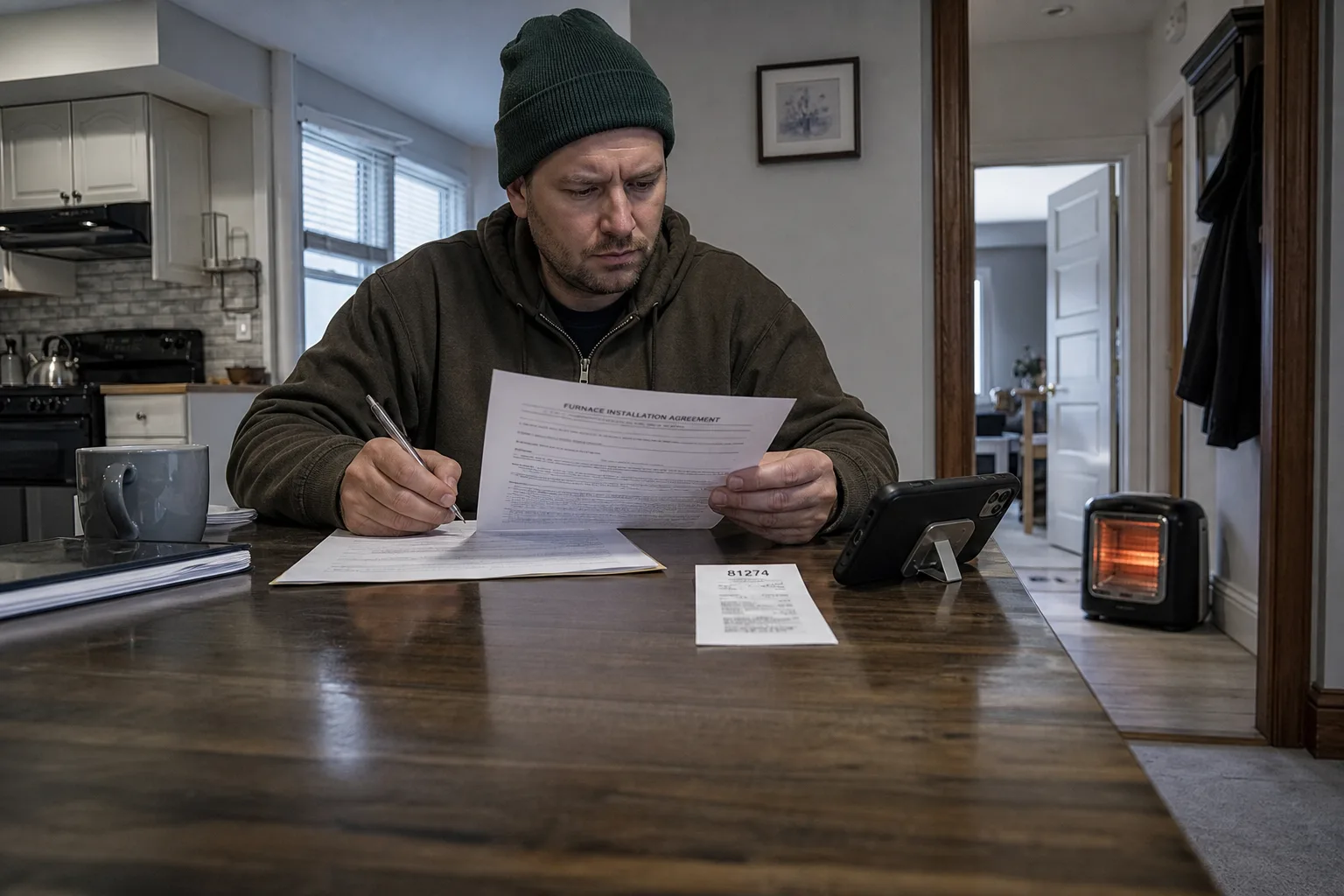
A household outside Columbus had a furnace replaced in mid-November by the installed-sales division of a national home improvement chain, financed through the chain's own credit line, installed by a subcontracted crew whose truck carried a different company name. By December 3 the unit was short-cycling and the upstairs never got above sixty-two. The homeowner called the store, then the 800 number printed on the paperwork, then the subcontractor directly, and got three different answers in four days. Each answer was given in good faith. None of the three people speaking had the authority to order the thing that needed ordering.
The person answering the phone in December is often not last month's person
Large providers staff their contact centers to seasonal volume, and the fourth quarter draws in temporary agents, overflow vendors and cross-trained staff pulled from other queues. That agent can open a ticket, note a callback, and read the warranty language back to you accurately. What they generally cannot do is authorize rework on a subcontracted installation, because the money for that sits in a regional installed-sales budget with a named manager attached to it. The homeowner spent eleven days addressing people who were being helpful and were structurally incapable of deciding. That gap is the single largest cost driver in a holiday complaint.
The subcontractor was in the same position from the other direction. The crew that installed the furnace could see the problem, agreed on the likely cause, and still could not return without a work order from the chain, because unauthorized rework is unpaid rework. So the party with the diagnosis had no authority, and the party with the authority had no diagnosis, and the household ran two space heaters through the second week of December while the two waited on each other. The electric bill that arrived in January was the visible cost. It was not the expensive one.
What the season does to the clocks written into the contract
Installed-sales agreements commonly carry a short workmanship window, distinct from the manufacturer's warranty on the equipment itself, and that window is measured in days from substantial completion. December eats those days faster than any other month. Offices close between the holidays, regional managers take accrued time before it expires, and a ticket opened on the nineteenth may not reach a human with signing authority until the second week of January. A thirty-day window opened in mid-November can be nearly gone before the first substantive conversation happens, and nothing about the delay was the homeowner's doing.
There is a countervailing force worth knowing, and it favors the complainant. Large organizations close budget periods at year-end, and a regional manager holding an unresolved installation defect on December 28 has a strong reason to spend against the current year rather than carry the problem forward. The same calendar that slows the routing sharpens the decision once you reach it. The whole task, then, is compressing the routing time so the file lands in front of the person who benefits from clearing it while that incentive is still live.
What escalating out of order actually costs
Skipping steps feels efficient and usually is not, because a complaint that arrives at an executive relations desk without a ticket history gets routed back down to create one, and the round trip costs one to two weeks. The Federal Trade Commission oversees consumer protection practice in this area, and the practical reading of how these organizations respond is that the file has to exist before anyone senior will act on it. Cost, in this posture, is measured in three currencies: unpaid time off work for visit windows nobody keeps, substitute expenses like heaters or a rental, and the deadline that lapses while the file is in transit.
The order that worked for the Columbus household took nine days. They put the complaint in writing to the store's installed-sales desk with the contract number, the install date and photographs, asked in that same message for the name and title of the regional installed-sales manager, and sent a copy to the financing arm noting a billing dispute on the account. That last step matters more than it looks, because a disputed balance moves the file into a queue with a mandatory response clock, and the credit side of the business has leverage over the installation side that no customer holds directly.
Reaching the party who holds the choice
The regional manager called on the tenth day, approved a return visit and a partial credit against the financed balance, and the crew came back on a Saturday between Christmas and New Year because that was the slot the manager could authorize overtime for. Every earlier conversation had been with someone whose job was to record the problem. One conversation was with someone whose job was to price it. Identify which is which on the first call, in writing, and the December calendar starts working in your favor rather than against it.