Legal Affairs
A Cracked Dresser Leg After an Interstate Move, and Which Paper Decides the Claim
In a household goods claim, the driver's inventory sheet and the valuation box you checked at booking outrank every photograph you took before the truck arrived.
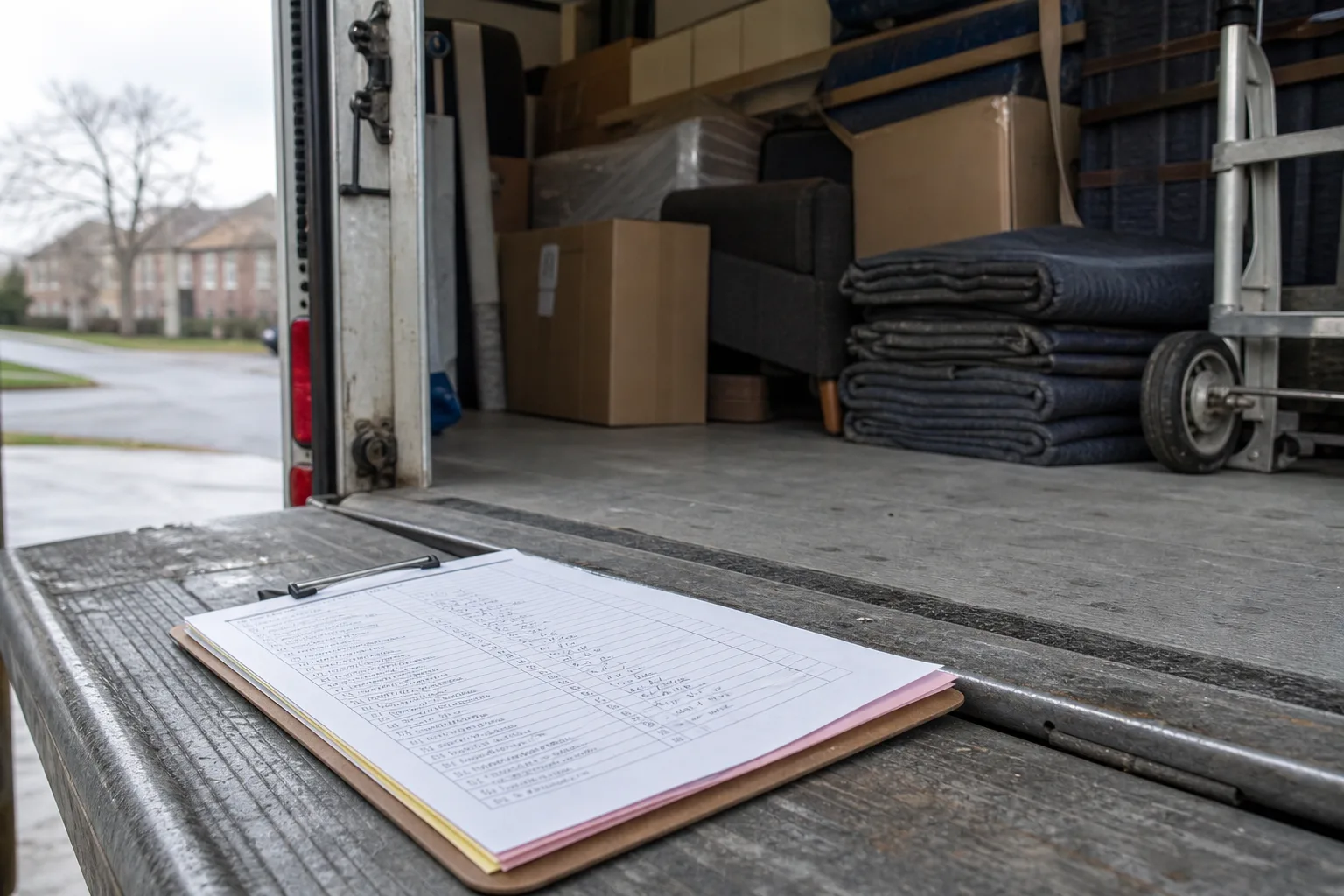
The dresser came off the truck in Charlotte with the front left leg cracked through, and the household that had shipped it from Columbus had eleven photographs of that dresser taken the week before the move, all clear, all timestamped, all showing an intact leg. They sent the photographs to the moving company's claims address the same afternoon. The claims examiner did not dispute a single image. She went instead to a document the household had signed twice, once in Ohio and once in North Carolina, and the outcome of the claim was decided there, on a line neither of them remembered reading.
That document is the origin inventory, sometimes called the descriptive inventory, and on an interstate household goods move it functions as the agreed record of what condition each item was in when the driver loaded it. The driver writes condition codes next to each line: scratched, marred, gouged, chipped, soiled, with a location symbol for which surface. Item 114, four-drawer dresser, carried a code for a preexisting scratch on the top and nothing else. At delivery, the same sheet comes back out, and the customer signs to say the item arrived. That signature is the moment the choice moves.
The paper that outranks the photograph
Photographs taken in your own house prove the item was intact in your house. They do not prove it was intact when the driver lifted it onto the truck, and they say nothing at all about its condition at the moment it crossed your new threshold, which is the only interval the mover is answerable for. The inventory sheet covers both ends of that interval and it is the one record both parties have signed. This is why the exceptions you write at delivery, in the space provided, before you sign, carry weight that a photograph emailed four hours later does not.
The Charlotte household had written nothing at delivery. Two movers were carrying boxes past them, the driver wanted the sheet back, and the dresser was still shrink-wrapped when they signed. The crack was found that evening. It was not a hopeless position, because a mover cannot refuse a claim purely for concealed damage found after the crew leaves, but it moved the household from a documented exception to an assertion, and an assertion has to be built back up out of other material. It took them three weeks to do it.
The box you checked at booking sets the ceiling
Before any of that mattered, the valuation choice had already fixed the most the claim could ever be worth. Interstate movers must offer two levels of liability. Full value protection makes the mover responsible for repairing, replacing, or paying the current value of a damaged item. Released value costs nothing extra and limits the mover to a flat rate per pound per article, a figure low enough that a heavy, cheap item is covered better than a light, expensive one. A ninety-pound dresser under released value is worth a fraction of what it costs to fix. The estimate paperwork carries this election, and the customer initials it.
This is the part of the file that most rewards attention while you still have a choice, because it is the only element of the dispute that is settled entirely before anything goes wrong. Once the truck is loaded, no amount of evidence changes the ceiling. The household in this case had taken full value protection, which is why the claim was worth pursuing at all, and why the examiner spent time on the inventory sheet rather than issuing a small check and closing the file.
Who is actually deciding
The first decision-maker is the mover's own claims department, which is an unusual arrangement and worth naming plainly. The Federal Motor Carrier Safety Administration is responsible for regulating interstate household goods carriers, and the rules it enforces set the shape of the process: the claim must be filed in writing within nine months of delivery, the mover must acknowledge it within a set period, and it must pay, decline, or make a firm offer within a further period rather than leaving it open. Movers must also offer a neutral arbitration program. That program, not a courtroom, is where most contested claims of this size end.
Knowing that the second decider is an arbitrator reading a paper file changes what evidence is worth assembling. The arbitrator will not visit the house, will not meet the driver, and will not weigh tone. What travels well on paper is specific and independently generated: the signed inventory with its condition codes, the bill of lading, the weight tickets, a written repair estimate from a furniture restorer naming the damage and the cost, and delivery-day photographs that show the item in the room with packing material still attached.
What did not survive the file, and what did
The household's timestamped pre-move photographs were accepted and then set aside, useful only as background. What carried the claim was narrower. The restorer's estimate described a fresh break across the grain with clean, unweathered fibers, which is a statement about when the damage happened rather than a statement about how careful anyone was. The delivery photographs showed torn shrink-wrap and a scuff on the wrapping directly above the break. The inventory sheet, silent on leg damage at origin, was read as evidence that the leg was sound when loaded.
The claim settled for the repair figure. It took longer than it needed to because the household spent the first two weeks arguing that they were careful people who had taken photographs, which nobody doubted and nobody was deciding. The examiner and, behind her, the arbitrator were both deciding a narrower question: what does the signed paperwork show about the condition of item 114 at two specific moments.
Every move produces one window in which the customer holds all of the choice, and it closes when the sheet is handed back at the curb. Ten minutes with a pen at that moment is worth more than any file built afterward.