Finance
Calling to Ask If Hail Is Covered? Who Turns That Question Into a Claim on Your Record
A homeowner's phone call about a hail-damaged roof became a logged loss before anyone inspected anything. Tracing who in the carrier actually holds that decision.
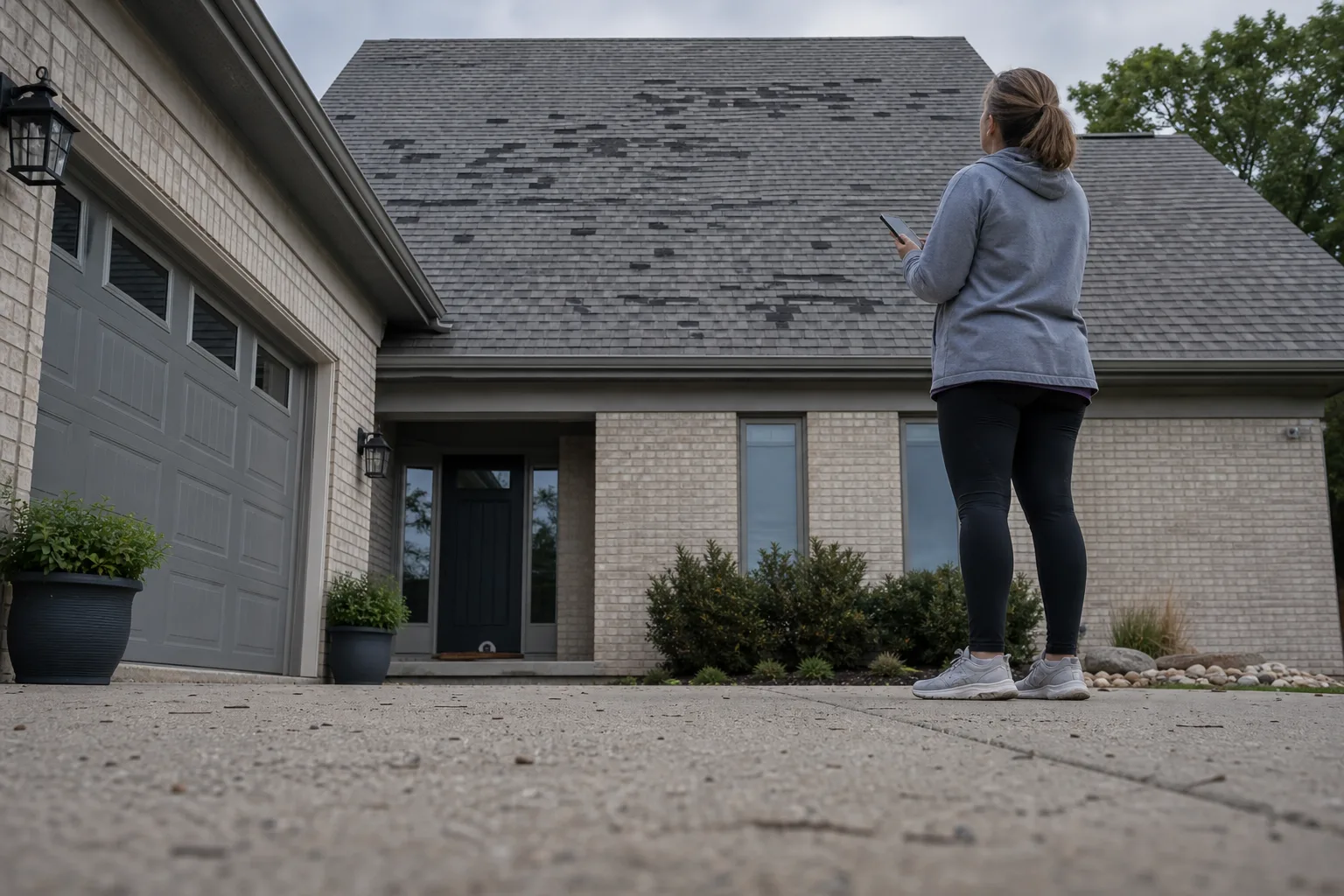
A homeowner north of Dayton had a roofer leave a door hanger after an April hailstorm, climbed up far enough to see bruising on the north slope, and called the number on her insurance card to ask a single question: is hail damage covered under this policy. The representative took her address, the date of the storm, a description of the roof, and said an adjuster would reach out within two business days. She had not asked for an adjuster. By the time she understood that the conversation had produced a claim number, the file existed, and the shortest route out of it was no longer a phone call.
The person who answers is not the person who decides, but the log is permanent
At a national carrier, the first voice is usually a claims intake representative working from a script that treats any described damage as a first notice of loss. That role is not evaluative. It exists to capture facts quickly and route them, and the incentive built into it is completeness rather than restraint, because an intake rep who fails to open a file on a real loss creates a bigger problem than one who opens a file on a question. The homeowner was addressing what she thought was an information desk. She was addressing the front end of a claims operation, and the two things share a phone number.
The practical consequence is that the choice about whether to make a claim moved out of her hands about ninety seconds into the call. Carriers vary in how they code inquiries, and some maintain a genuine separation between a general coverage question and a reported loss. The way to find out which one you are dealing with is to ask directly, before describing damage, whether the conversation will generate a claim number or a loss notice, and to keep the specifics general until you have an answer.
Your agent sits next to the decision and rarely inside it
The agent whose name is on the declarations page occupies a position readers routinely misread. A captive agent, appointed by one carrier, can explain how that carrier's underwriting tends to treat a weather loss versus a water loss, can flag a deductible you have forgotten, and can sometimes get a file reviewed before it hardens. What that agent cannot do is overrule underwriting or delete a reported loss. An independent agent holds a different asset entirely: appointments with several carriers, which means that if a renewal comes back with a surcharge or a nonrenewal notice, the alternative market is already in the office rather than somewhere you have to go find.
So the useful call, before the carrier call, is to the agency. Ask what the deductible actually is on this peril, whether the carrier separates wind and hail into its own deductible percentage, and what the agency has seen happen at renewal for similar losses in that book of business. That is knowledge the agent genuinely holds. It costs nothing, and it happens before any file opens.
What the underwriter reads at renewal is not the claim, it is the file
Renewal pricing is set by an underwriter who was nowhere near the original conversation and will never speak to you. What that person sees is a loss history record, drawn from an industry database that functions as a consumer reporting agency, along with the carrier's internal notes. The Federal Trade Commission is responsible for enforcing the Fair Credit Reporting Act, which governs how those reports are compiled, disclosed, and disputed, and which gives you the right to request your own file and correct an error in it. Requesting it before you buy or renew is one of the few moves that puts information back on your side of the table.
The notes matter as much as the loss. An adjuster who inspects a hail claim also records roof age, prior repairs, the condition of flashing and gutters, and anything visible that suggests deferred maintenance. Those observations can outlive the claim itself. A closed file with a clean inspection reads very differently from a closed file describing an aging roof.
Sequencing a real claim so the file works for you
When the damage is genuine and clearly above the deductible, the sequence that protects the renewal is straightforward. Get a written contractor's estimate first, so you know the number before the carrier does. Photograph everything, including the undamaged parts, because condition evidence is the part adjusters cannot reconstruct later. Make the loss notice deliberately, with the date, cause, and scope already settled in your own mind. Then keep every piece of correspondence in one folder, because a claim documented this well tends to close faster, close cleanly, and leave behind a record that an underwriter reads without hesitating.
The Dayton homeowner's roof did qualify, the claim paid, and her renewal moved less than she feared. What she changed afterward was the order of her calls: agent first, estimate second, carrier third. The decision was always going to be made by people she would never meet, and the only leverage available was in what reached them.