Finance
Water Through a Bay Window? Who Actually Reads the Exclusion That Decides It
A storm claim denied under a rot exclusion shows how many people stand next to the decision, and which one of them is actually holding it.
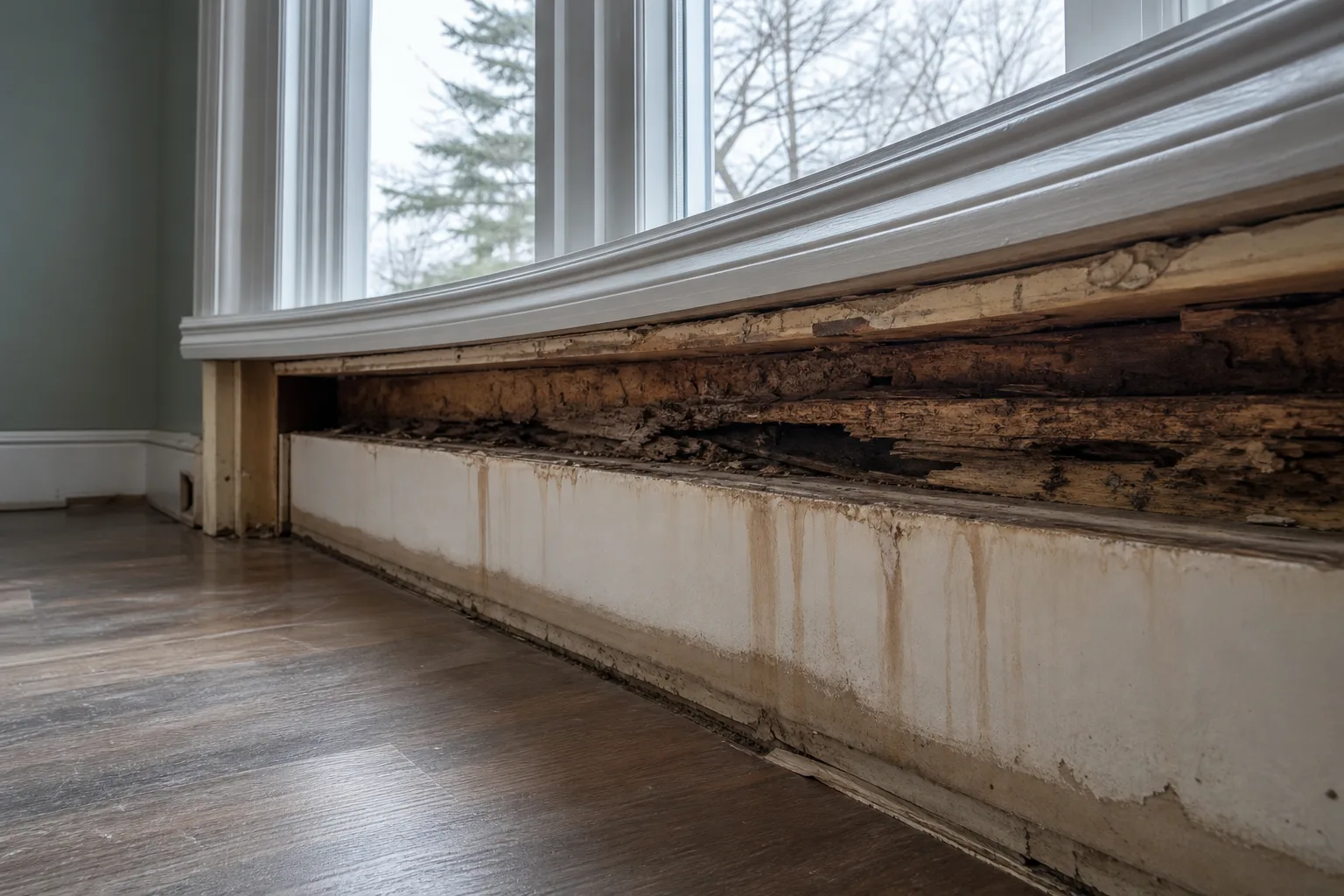
A July windstorm pushed rain sideways into a bay window on the front of a 1978 colonial, and by the next morning the homeowner had a brown stain running down the drywall below the seat, a buckled section of floor, and a claim number. The field adjuster arrived four days later, photographed the stain, pulled a corner of trim, and found the sill rotted through in a way that plainly predated the storm. Six weeks on, the denial letter cited the policy's exclusion for wear, tear, deterioration, rot, and the homeowner read it as a decision the adjuster had made. The adjuster had made almost none of it.
The clause was written long before anybody looked at the window
Exclusionary language in a standard homeowners form is not drafted at the time of a loss, and it is not drafted by the person who comes to the house. It is written into a policy form, filed with the state insurance department, approved or adjusted at that level, and then sold through an agent who in most cases has no authority to vary a word of it. The homeowner who argues with the adjuster about whether the clause is fair is arguing with someone who has no power to change it. What that person can do, and what matters far more, is characterize the facts the clause is applied to.
Read the exclusion with the sentence that follows it, because that sentence usually does the real work. Many forms exclude rot and deterioration, then restore coverage for an ensuing loss of a kind not otherwise excluded. A rotted sill is the homeowner's problem, permanently. Water that entered through that sill during a covered windstorm and ruined flooring, insulation, and drywall is a different question, and the two questions have different answers more often than denial letters suggest.
The field adjuster recommends and the examiner decides
The person at the house is usually either a staff adjuster working a territory or an independent adjuster working the carrier's file under contract, and in both cases the output is a report and an estimate rather than a decision. Coverage is applied by a claims examiner sitting somewhere else, reading the photographs, the estimate, and whatever narrative the field adjuster typed into the system. That narrative is the hinge. A field note reading "long-term rot at sill, no storm damage observed" produces one letter; a note reading "pre-existing rot at sill, wind-driven rain entered during storm, interior finishes wet" produces a different one from the same clause.
This changes who a homeowner should be talking to and about what. Arguing fairness with the field adjuster is wasted breath. Walking that adjuster through the physical sequence, pointing out the wet insulation two cavities over, asking what will appear in the report, and following up in writing with the same facts, puts information in front of the person who actually applies the clause. The examiner never visits the house. The examiner reads.
A contractor's invoice and an engineer's report are not the same document
Two other parties routinely stand next to this decision, and homeowners tend to overweight the cheaper one. The restoration contractor who dries the house writes a scope and an invoice, and the language chosen there travels into the claim file whether or not anyone intended it to. An invoice headed "repair rotted window and resulting water damage" hands the examiner the exclusion in the homeowner's own paperwork. A scope that separates the carpentry from the water mitigation, line by line, leaves the two questions separate where they belong.
The engineer or cause-of-loss consultant is a different animal. Carriers retain them on contested files, their reports carry weight no contractor's invoice carries, and the conclusion often turns on a single word about whether the damage was gradual or sudden. A homeowner can retain one too. On a modest interior loss the cost rarely justifies it; on a claim involving structural members, a roof system, or a slab, it is frequently the only document that moves an examiner, because it speaks the format the carrier already trusts.
Some exclusions grade a condition, others mark a border between policies
The rot exclusion is a judgment call about condition, which means evidence can shift it. Other exclusions are not judgment calls at all, and recognizing the difference saves months. Surface water and flood are excluded from homeowners policies because that peril lives in a separate program, the National Flood Insurance Program, which the Federal Emergency Management Agency oversees. No amount of argument, no engineer, and no sympathetic adjuster moves water from one policy to the other. Earth movement works similarly in most states, sitting behind a separate endorsement or a separate carrier entirely.
So the first sort to run on any denial is whether the clause is drawing a border or grading a condition. A border means the question is which policy, and the useful next call is to an agent about what coverage exists or can be added before the next season. A grading clause means the question is which facts, and the useful next step is documentation aimed at an examiner. The bay window was a grading clause, and the homeowner's floor and drywall were paid after a second inspection and a revised contractor scope.
The agent, the regulator, and the order to use them
An agent cannot overturn a coverage decision, but an agent can tell you which form and endorsements you actually bought, and can escalate inside the carrier in a way a policyholder's phone call does not. The state insurance department takes complaints and requires carriers to answer them on a clock, which is worth using once the file is complete and worth very little before. Both of those come after the facts have been put in writing to the examiner, because both of them simply route the same file to someone else.
The clause in the letter is fixed. Nearly everything else on that page came from people who were describing what they saw, and descriptions can be corrected.