Legal Affairs
First Speeding Ticket? Who Gets Paid for Each Answer You Are Given Before the Meeting
A first citation sends you to four different desks for advice, and each desk is paid by someone different. Here is how to sort the answers before you spend an hour on counsel.
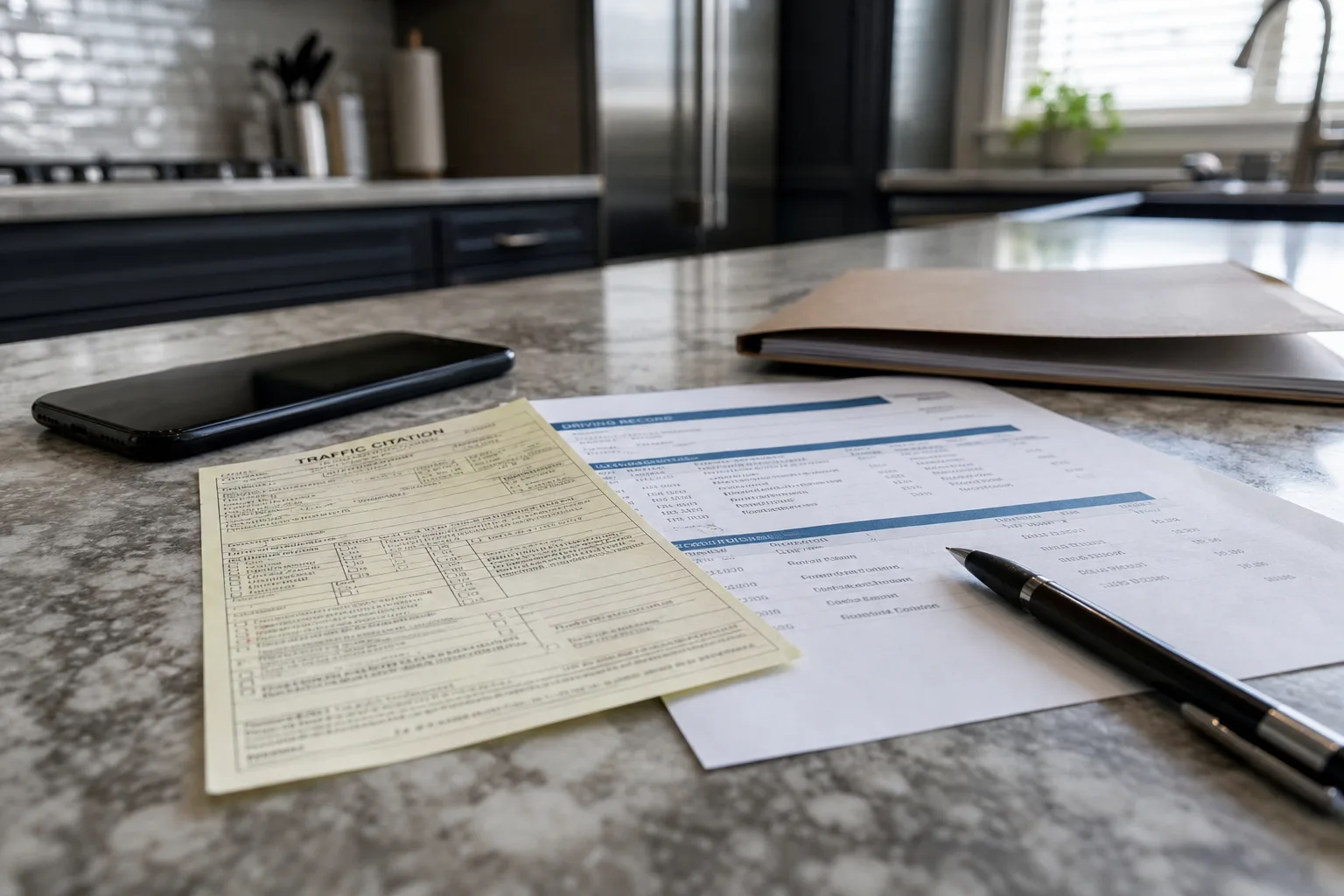
The citation was written on a Tuesday evening for 62 in a 40 on a four-lane arterial, and the driver, a thirty-one-year-old who had never been stopped before, put it on the kitchen counter and left it there for nine days. The ticket carried a response deadline printed in small type near the fold, a case number, a court address, and a box he had not checked at the roadside. By the time he started calling people, he had four days left and five different answers, none of which agreed with each other. Every one of those answers came from someone, and every one of those someones was paid by a different party.
The clerk is paid by the county and has no stake in your plea
The court clerk's window is the only place in this sequence where nobody profits from the direction you choose, which makes it both the most reliable source and the narrowest one. A clerk will confirm the response deadline, tell you whether a written not-guilty response is accepted by mail or online, explain what a mitigation hearing is procedurally, and say what happens to your case if the deadline passes without a filing. What a clerk will not do is tell you which option is better for you, because giving that opinion would be practicing law from a government desk. First-timers routinely mistake that refusal for unhelpfulness. It is the opposite: it is the one answer in the file that has not been shaped by who is paying for it.
Your insurance agent is paid on the policy, not on the outcome
The second call most people make is to their insurance agent, and the answer that comes back is usually some version of one ticket will not hurt you much. That may be true. It is worth knowing that an independent agent is compensated by the carrier, typically as a percentage of premium, and a captive agent is compensated by the single company whose product they sell, so neither is paid to model what a moving violation does to your rate three years out or to tell you the conviction may follow you to a different carrier. Ask the narrower question instead: whether the specific violation code on your citation is one their underwriting treats as a surchargeable moving violation, and for how many years. That question has a factual answer, and the agent can look it up.
Flat-fee ticket services and hourly counsel are paid on different curves
Online ticket services advertise a single price to handle the whole matter, and their economics depend on volume, on a high proportion of cases that resolve identically, and on very little attorney time per file. That model works when the facts are ordinary and the goal is a routine amendment. It works badly when there is a commercial license involved, a prior record, an accident attached to the stop, or a speed high enough to trigger a separate charge. An hourly or fixed-consult traffic ticket attorney is paid for judgment about which of those you have, and that is the thing a first-timer cannot yet sort. The Federal Trade Commission oversees how consumer services describe what they deliver, which is a good reason to read the guarantee language on any flat-fee offer literally rather than generously.
What to bring so the paid hour is spent on judgment
Bring the citation itself, both sides, photographed and printed. Bring your driving record, ordered directly from the state licensing agency rather than from a resale site, because counsel needs to see what the prosecutor will see, including anything from another state you have forgotten. Bring the deadline date written at the top of the page, any correspondence the court has already mailed you, and a short written note of what was said at the roadside, dated the day you write it. If your job depends on the license, or your employer runs an annual records check, say so in the first two minutes rather than the last five, because that single fact changes which resolutions are acceptable and therefore changes the whole strategy.
The question that sorts the advice
Ask each person who gives you an opinion how they are compensated for this matter, and ask it plainly, because the honest ones answer without hesitation. The clerk is salaried and neutral. The agent earns on the policy staying in force. The flat-fee service earns the same amount whether your file takes twenty minutes or two hours, which tells you something about where the effort goes. Counsel billing for a consultation earns for the hour and then tells you whether you need the next one. None of these arrangements is improper. Knowing which one you are talking to is what turns five contradictory answers into a ranked list.
The driver filed a written not-guilty response on day thirteen, which preserved every option, cost nothing, and bought several weeks. He then spent one paid hour with a folder that already contained his record. That is the whole trick: the deadline gets protected first, and the judgment gets purchased second, once there is something on the table to exercise it on.