Health
Asked for a Four Year Old Job File? What a Good Records System Does Differently
A sixty-person contractor needed one 2021 job file in ten days. What the search cost, and the retention habits that would have made it a twenty-minute task.
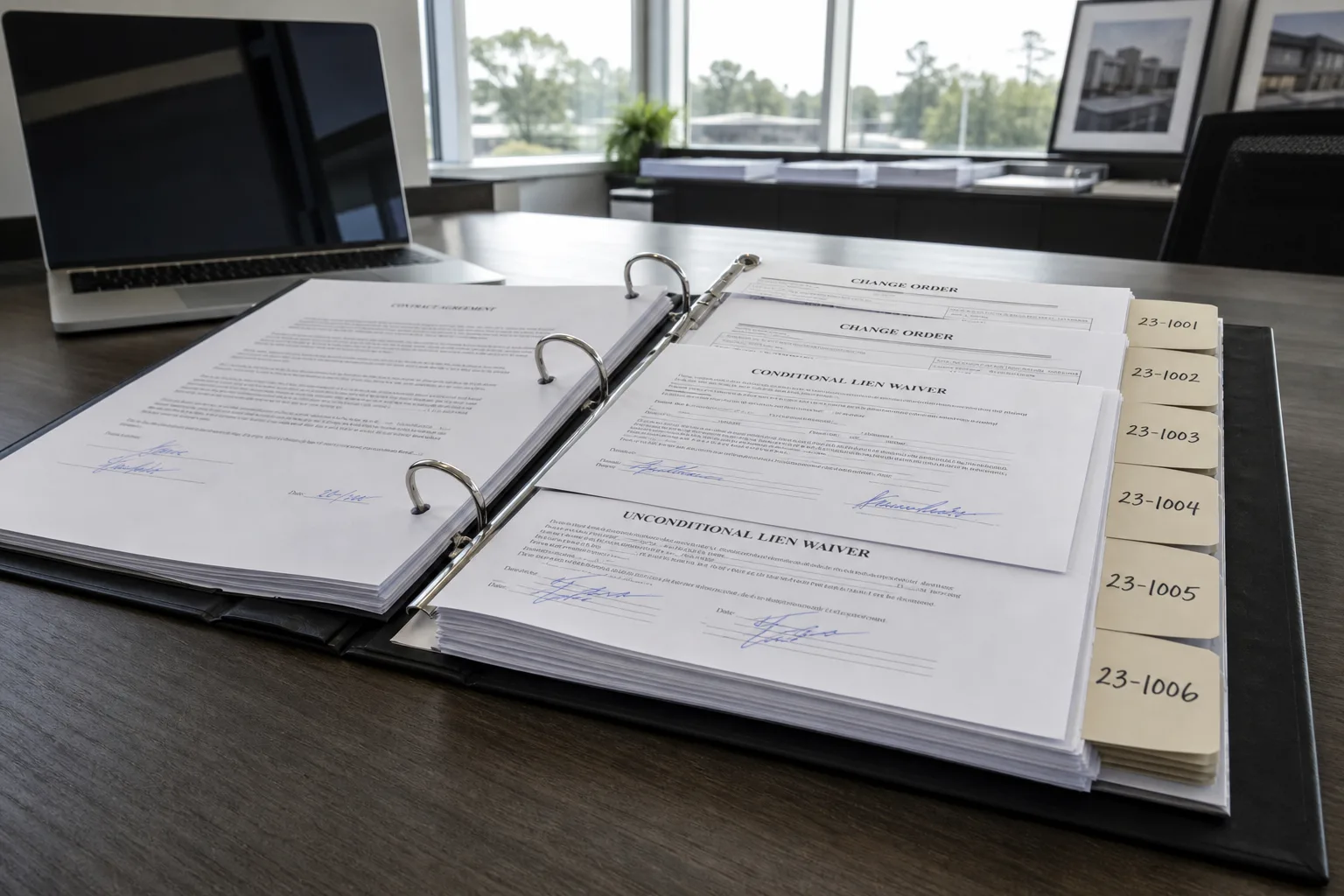
A mechanical contractor with about sixty employees and three branch offices received a demand letter in March concerning a rooftop unit installed on a commercial building in the fall of 2021. Counsel for the building owner wanted the complete job file: the signed contract and change orders, the submittals, the installer's daily logs, the commissioning report, the warranty registration, and every invoice with its backup. The company's controller said yes before checking. Pulling the file took nine working days, involved two branch managers, a former project manager who no longer worked there, and roughly eleven hours of outside accounting time billed at the firm's standard rate. The documents existed. Finding them was the expense.
The gap is retrieval, not storage
Almost nobody throws anything away anymore, because storage costs less than the meeting required to decide what to delete. That is precisely why storage stopped being the measure of a competent records function. The contractor had every document the attorney asked for, scattered across a shared drive organized by whoever created the folder, an email archive, a field app the company had stopped paying for in 2023, and a banker's box in the Northside branch's utility closet. A barely adequate system can prove, eventually, that the record survives somewhere. A good one answers the question of where it is before anyone starts looking, because the location was decided when the document was created rather than when it was demanded.
What made the nine days expensive was not any single search. It was the sequence: each dead end had to be ruled out before the next one was tried, and three of the people doing the ruling out were also supposed to be running jobs that week. The outside accountant, billing hourly, reconstructed the invoice backup from bank records because the original lien waivers could not be located in time. That reconstruction was competent work and it was also work the company paid for twice, once in 2021 and again in March, which is the real price of filing by habit rather than by rule.
The clocks that run, and the fact that they run separately
The mistake inside most growing organizations is the single retention number, applied to everything, usually chosen by someone who heard it at a conference. Records do not share a clock. Tax substantiation runs from when a return was filed, and the Internal Revenue Service is the authority that sets how long a taxpayer must be able to support what appears on a return, with the ordinary examination window extending in specific circumstances involving substantial understatements or unfiled returns. Payroll and employment records run on their own schedule under federal wage and hour rules. Construction defect exposure runs on a state statute of repose that can stretch far past any tax period, which is exactly why a 2021 job file was still live in a 2025 demand letter.
Each clock attaches to a category, not to a project. The contract and the change orders for that rooftop unit mattered because of the repose period in that state. The invoices mattered for tax substantiation. The installer's I-9 mattered for an entirely unrelated reason and on an entirely unrelated timetable. A good administrative function writes those categories down once, assigns a trigger event to each one (filing date, termination date, substantial completion, final payment), and lets the categories expire independently. A barely adequate one keeps everything for seven years because seven sounds safe, then discovers that seven was too short for the thing that actually got litigated and too long for the personnel files now sitting in discovery.
Who is paid by whom for the advice you are getting
Retention advice is rarely disinterested, and the direction of the bias is usually easy to read. A records management vendor charges by the volume stored and the seat licensed, so its recommended schedule will lean long and its onboarding will encourage you to migrate everything rather than triage first. A shredding company charges by the pound and the pickup, so its educational material will emphasize the liability of keeping things and the compliance value of a standing destruction cycle. Outside counsel bills by the hour and carries the professional risk of having told a client to destroy something, so counsel's instinct, honestly held and also commercially comfortable, runs toward preservation. Your accountant bills for reconstruction when the backup is missing.
None of that makes any of them wrong. It makes the sourcing worth stating out loud before a policy gets adopted, because the one party with no revenue attached to the answer is usually the controller or office manager who has to live inside the system. In the contractor's case, the records vendor pitched after the March scramble proposed indexing the entire shared drive, priced per gigabyte, which would have preserved the disorder at a monthly cost. The cheaper fix, which the controller implemented, was a naming convention and a required close-out checklist per job. It cost nothing beyond the enforcement.
What the good version looks like in the admin seat
Four things separate the two tiers, and all four are habits rather than products. First, the file is indexed at creation, with a job number, a document type, and a date in the file name, so that retrieval is a search rather than an excavation. Second, there is a close-out packet per project, assembled while the crew is still reachable, containing the executed contract, final change orders, the commissioning or inspection record, warranty registrations, and final lien waivers. Third, there is a written schedule that says when each category is destroyed and who signs off. Fourth, there is a legal hold procedure that suspends the schedule the moment a claim is reasonably foreseeable.
That last one is what turns a destruction schedule from a liability into a defense. Routine deletion under a written, consistently applied policy is defensible. Deletion after a demand letter arrives is not, and the difference between the two is a dated hold notice sent to the people who hold the files. The contractor now sends one by email, keeps the acknowledgments, and lists the custodians by name. When the second demand letter arrived in August concerning a different building, the file went out in two days, assembled by one person, with no outside billing attached to it at all.
The test is not whether the documents still exist four years later. It is how many people, and how many billable hours, stand between a request and the file. Companies that answer that question before someone else asks it tend to find the fix is procedural, cheap, and entirely within the admin function's own control.